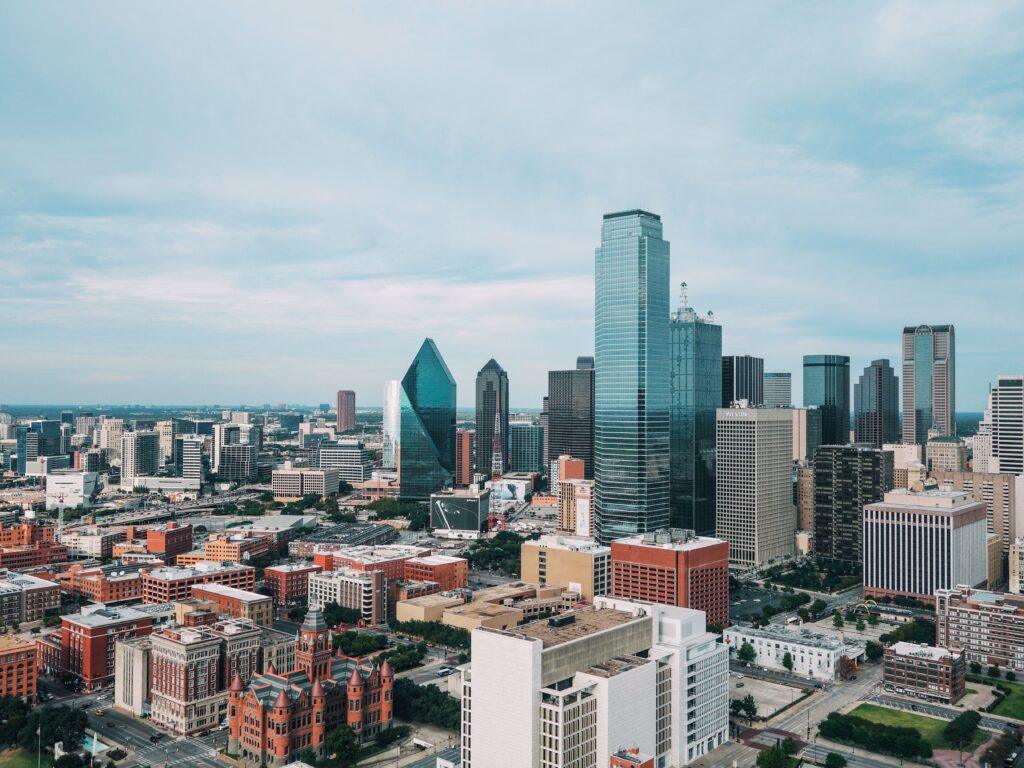
Until recently, Y’all Street referred more to a state of mind than an actual, functional financial exchange. But with the ceremonial ringing of the closing bell, Texas’ stock exchange officially arrived on Friday, July 31, 2026. Arising as a rival to the New York Stock Exchange (NYSE), TXSE is poised to take advantage of what experts are calling the Boom Belt.
Climbing up out of the Dallas skyline, the physical building that will house the TXSE is still under construction. But the financial and tech infrastructure is well established and represents a shift from the coasts to the middle of the country for power brokers and financial titans.
Since 2025, corporate relocations of major financial institutions have brought thousands of jobs and trillions of dollars to the ninth-largest city in the US. With a GDP that’s in the top ten globally, Texas has corporate-friendly tax laws that make relocating a smart financial decision.
As of now, Texas is home to more Fortune 500 companies than any other state. For businesses relocating to the Boom Belt, there’s a lot to consider. The region is home to major corporate headquarters, professional sports teams, outdoor amenities, and more than 70 colleges and universities.
Beyond the corporate side, there’s a human side to the rise of Y’all Street that can’t be ignored. Managing executive and corporate relocations to the region is a full-time job, one that we understand on a fundamental level.
What “Y’all Street” Actually Refers To
Until recently, the NYSE and Nasdaq dominated the financial services industry. Even with the multi-trillion-dollar annualized GDP, Texas lacked the infrastructure to support a large financial exchange.
Enter the Texas Stock Exchange. Initially launched as a purely electronic national securities exchange, “Tex-see” is backed by some of the largest financial institutions in the world. BlackRock, Goldman Sachs, Charles Schwab, among others, provide the capital for the most robust exchange ever approved by the SEC.
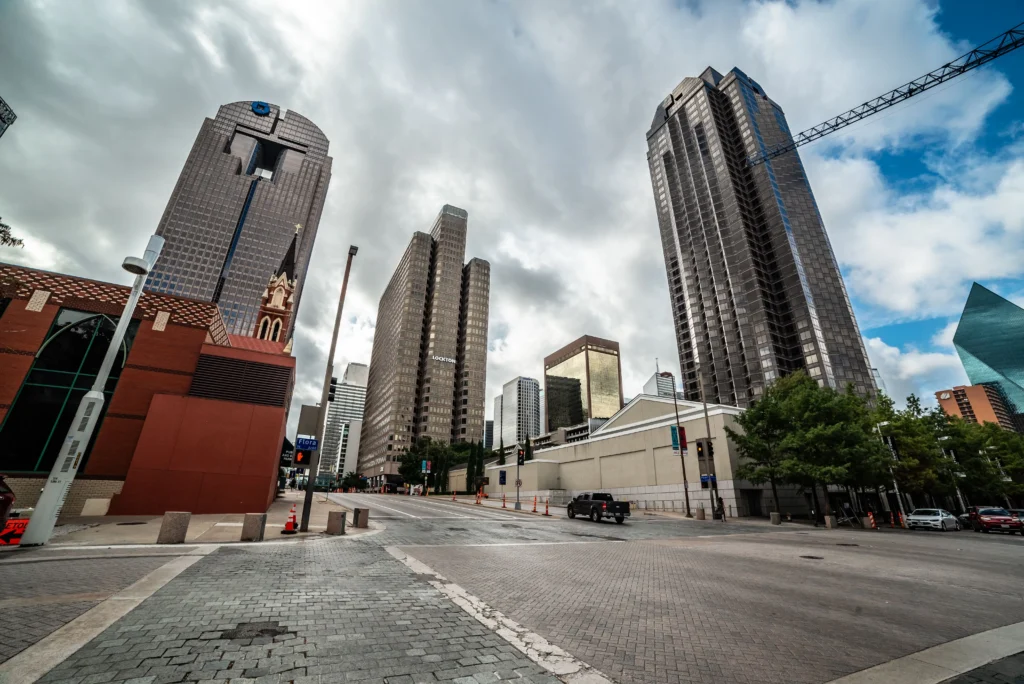
Downtown Dallas is drawing financial institutions faster than ever. Goldman Sachs, in the city since 1968, is building an 800,000-square-foot campus planned for over 5,000 employees. Scotiabank has a new hub in Victory Park, bringing over 1,000 jobs, and Fifth Third Bank is relocating to Preston Center.
With this movement, the NYSE and Nasdaq have increased their presence in the Lone Star State. Instead of ignoring the upstart challenger, they recognize the real danger it poses to their dominance in the financial sector.
TXSE has looser listing rules and less regulation than its well-established rivals. Companies seeking a business-friendly listing environment are queuing up for when the exchange begins offering IPOs in 2027. Their phased rollout began in July of 2026, with full trading beginning in 2027 out of their home in the new Bank of America tower.
The Goldman Sachs Campus as the Physical Symbol
One of the biggest signs that operators are expecting the TXSE to dominate the market is the new Goldman Sachs campus. This development supersizes Goldman’s second-largest U.S. office outside of Manhattan. Much more than a satellite, the campus represents a long-term investment in the region as a new hub of commerce.
Capital investment in physical assets sends a clear signal to the rest of the industry that titans are betting on Dallas. Others, like JPMorgan Chase and Morgan Stanley, are either already present or have plans for Dallas offices as well. Generous tax breaks on corporate investment make the metroplex an attractive site when contrasted with higher operating costs in traditional hubs.
Why This Is Happening
TXSE grew out of proximity. Bankers and investors from the coasts needed offices closer to corporate headquarters in the city. The scale of the state’s economy makes it an attractive place to do business, one that CEOs and boards can’t ignore. In Dallas alone, the annual GDP is estimated at over $744 billion.
Goldman Sachs built their first offices in Dallas in 1968 to be closer to the energy sector dominating the state economy. Back of the office jobs were handled locally, with power players flying in to DFW for major deals.
Corporate and wealth clients flocked to DFW over the last decade, but still had to trade through the NYSE and Nasdaq. Y’all Street allows them to do business close to home, in a business-friendly environment.
In the background, the DFW area has grown along with the corporate relocations. Experts expect the North Texas population to top 9 million by 2027. For corporations seeking qualified employees, this depth provides a rich job market of candidates.
What This Means for Corporate Relocation Demand

With all of the growth projected over the next several years, real estate and construction are the beneficiaries. Relocations aren’t just theoretical or on paper; they include thousands of support staff. Everyone from senior bankers to real estate managers will, and already are, flocking to the area. Ahead of major campus openings, support staff will be onsite to ensure a smooth transition to business as usual.
Understanding timelines is essential to the success of corporate relocation specialists. Hiring and relocation happen far in advance of projected opening dates. Goldman’s campus may open in 2028, but the relocation process has already begun.
Leading indicators of volume include published timelines, and corporate relocation specialists can expect the Y’all Street boom soon. Local headcount is just the beginning; out-of-state moves are coming, and at scale.
Facilities and office movers paying attention to these shifts should also see a rise in volume ahead of custom campus openings. Temporary offices will pop up as more businesses relocate to the region, and reconfigurations will be a part of that story as well.
Luxury Living for Y’all Street Execs

Outside of the office, the residential real estate market is seeing pressure from the top down. Luxury and high-end homes in proximity to downtown Dallas are well established and have limited inventory.
Highland Park, University Park, and Preston Hollow contain estate-sized properties with deep history. C-suite executives and other professionals looking to live in these areas will pay a premium, with a caveat. Prices in Dallas are lower than in New York or Chicago, and execs coming in feel the difference.
Financial sector workers have access to luxury high-rise apartments in the city as well. Turtle Creek and Oak Lawn are just northwest of downtown, and provide a more sophisticated city lifestyle. On the edge of downtown, the Arts District and Uptown provide high-end city living with culture close by.
About ten minutes from downtown, Bluffview offers views and unique topography. Situated on the cliffs overlooking the Trinity River, the large private lots are highly sought after.
Finally, Lakewood near White Rock Lake combines historic homes, mature trees, and easy access to one of the most popular outdoor spots in the city. Running, cycling, rowing, and other water sports are encouraged in the neighborhood.
What This Means for a Moving Partner Serving DFW

Movers in the DFW area, and nationwide, have felt the pressure of the depressed housing market since 2022-2023. Those who’ve survived have found ways to leverage their assets and skills in different verticals, including office, warehouse, and industrial sectors. Ideally, corporate relocation specialists should be able to work with one moving partner for several different applications.
In-office shuffles, warehouse-to-new-office complex moves, long-haul residential moves, pack-and-move services, and more are all required to transplant operations. For workers relocating to the region, a moving partner that can work within a lump-sum or managed relocation program is a must. Knowledge of the metroplex is invaluable. And so is the ability to operate in the downtown Dallas area, with restricted building and elevator access, complex traffic issues, and tight timelines.
With over 30 years in operation, Little Guys Movers is the perfect partner for corporate relocation to the DFW area. We specialize in long-haul moves, in-office shuffles, and white-glove service. There’s not a neighborhood in Dallas we’re unfamiliar with, and downtown is no exception.
Our professional crews undergo rigorous training to ensure they provide the best service, every time.
Y’all Street is a sign of a cultural shift – Plan now to adapt
If your financial services business is considering a move to the DFW area, research is the best way to prepare. Find partners in the region that can provide the kind of service and professionalism you’d expect in your own office.
Little Guys Movers offers support for all kinds of office and residential relocations, and we’re here to help.