
Packing for a move is one of the most hated, yet most important parts of the moving process. Maybe you’ve spent years in one home accumulating stuff that may or may not hold any practical or sentimental value. As harsh as it sounds, you’d be surprised how many of the things in our homes fall into the “where did we get all this crap?” category.
For many of us, moving is infrequent. And unless you’re a minimalist, you don’t shop or decorate with a mover’s mindset. Studies have shown that recently, people are moving less and less. Where you might have spent five or six years in your starter home before moving up, it’s more likely 15 years today.
Depending on your lifestyle, the volume of stuff in your closets, garage, kitchen, and gear shed (outdoorsy folks represent!) varies. But what doesn’t change is that moving, and packing, sucks.
We’ve made it simple by bringing everything you need to know before your movers arrive into one convenient place.
How to use this guide
Use this guide like you live your life, in your own way. You might already know some of this stuff, and that’s fine! Get what you need from it and move on, no pun intended.
1. When to Start Packing for Moving

How far in advance should you start packing?
Ideally, start packing about six to eight weeks before you move. This gives you enough time to decide exactly what to do with all of your stuff without the pressure of time.
6-8 Weeks Before Your Move
You’re squarely in the declutter phase of your move at this point. Take time to go through stuff that’s been sitting on the shelf or in a box. If you haven’t used it in six months to a year, it’s a candidate for rehoming or tossing. The caveat here is for specialty items. Holiday decorations, seasonally specific gear, and similar items can stick around.
4-6 Weeks Before Your Move
Source and acquire packing supplies. You’ll need a variety of box sizes and strengths, bins if that’s more your style, and things like packing paper, bubble wrap, and tape. Moving a larger home? This is when you should start packing items you don’t use often. Label boxes or use a tracking app, but stay organized. You’ll thank yourself later.
Research and book your mover. We recommend working with a well-regarded local mover with over 30 years of experience, but you do you.
Read about how to choose a mover in our article: 15 Red Flags of a Bad Moving Company
2-4 Weeks Before Your Move
Start, or continue packing. Hit areas like the garage, attic, storage areas, and closets. Check your calendar and set aside items you know you’ll need before you move. Stay out of the kitchen! You’ll kick yourself if you pack that omelet pan and coffee maker too soon.
You can file your change of address with the USPS during this time. As long as you have a firm move-in date at your new place, it’s a quick step that’s easy to forget.
1-2 Weeks Before Your Move
Pack in earnest. Pack one room at a time, and label everything. If you’re putting items into storage, we recommend cataloging your stuff with either a monster spreadsheet or an app. Photos and box numbers help if you suddenly lose track of an essential item but can’t remember which box it went into.
48 Hours Before Your Move
Check cabinets, closets, and other out-of-sight spaces for items you might’ve forgotten about.
Keep a box or two out for important items you’ll need up until moving day.
Essential items:
- Coffee maker
- Toiletries
- Electronics and chargers
- Prescriptions
- Toilet paper and paper towels
- Soap
- Shower curtain and rod
- Pillows, sheets, and blankets
- Basic tools (box cutter, screwdriver/drill, flashlight, and extension cord
- Snacks and water bottles
What is the first thing you should pack when moving?
The first things you should pack when moving are seasonal items. They don’t fall into the essentials category, but they aren’t items to donate or toss either. Go through your garage, closets, etc., and make sure you don’t leave anything behind. Discovering an untouched closet on moving day is one of the worst surprises.
2. What to Get Rid of First
Purging before moving is probably the best advice we have to share. Moving items you never or rarely use, especially if they’re large or bulky, just takes up space. More importantly, if you’ve booked movers, they’ll end up costing you money.
Keep an eye out for the most forgotten thing when purging for a move: cords and chargers. It’s easy to overlook these items or let them get separated from their gadget, but in some cases they’re impossible to replace.
Here are the top 12 items you should toss before moving.
- Expired medication and old bath products
- Mismatched plastic food containers
- Old spices and pantry items
- Worn-out linens and discolored towels
- Unworn or damaged clothing
- Uncomfortable or damaged shoes
- Expired or half-used cleaning products
- Old paint and harsh chemicals
- The entire junk drawer
- Old paperwork and mail
- Broken or obsolete electronics
- Duplicate kitchen gadgets
In many cases, these items are already redundant in your home, or they no longer serve your lifestyle. Donate items that still have some life left, and toss or recycle the ones that don’t.
3. The Hardest Room to Pack
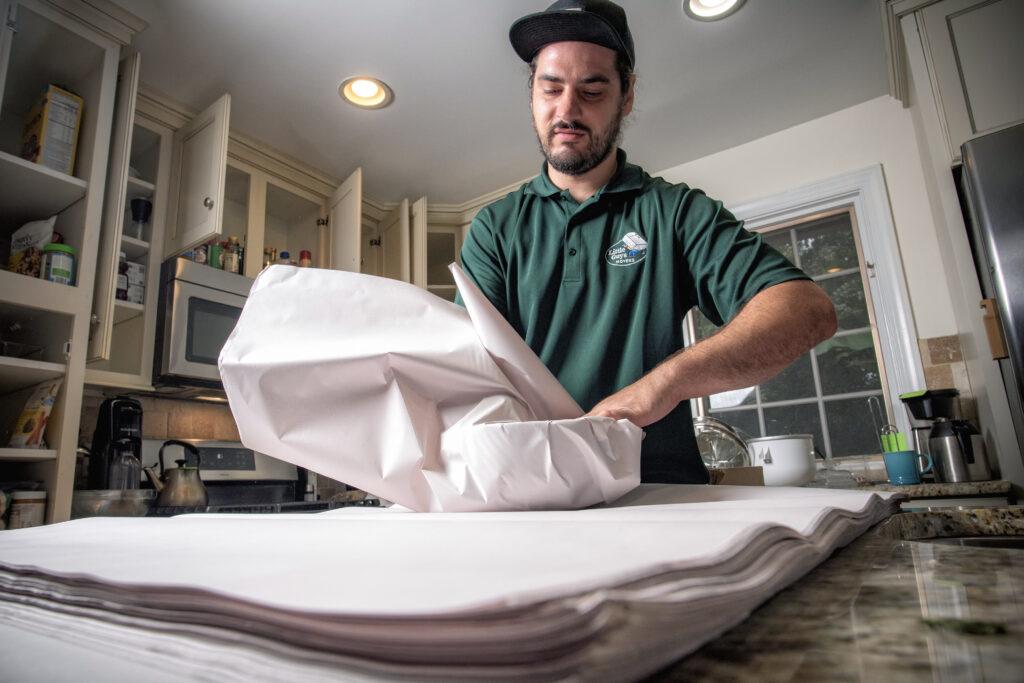
Almost all professional movers agree that the hardest room to pack is the kitchen. It’s not only the heartbeat of many homes, but it’s also full of fragile, awkward, and heavy items. Try to find a box that can handle cast iron pans, stock pots, and that omelet pan; we dare you.
Beyond that, kitchen items see daily use. Refrigerated items and other perishables complicate the process and need specific treatment to avoid spoilage.
Packing Your Kitchen for Moving
Here are our tips for the most efficient process:
Essential Packing Supplies
You’ll want a variety of moving boxes when packing your kitchen. Small boxes are best for pantry items like canned goods, cast iron, and other smallish but heavy items. Medium-sized boxes are good for lighter but bulky items. Heavy-duty, double-walled boxes are ideal for heavy fragile items like dishes and glassware.
Packing paper and/or bubble wrap are necessary for damage-free kitchen packing. You can also use clean dish towels in between items to protect finishes. Heavy-duty packing tape, permanent markers, pre-labeled stickers, and plastic wrap are also handy.
Packing Dishes and Glassware
Plates are among the easiest items to pack. Use crumpled packing paper or bubble wrap to line the bottom of the box. Then wrap individual plates or small stacks with packing paper before stacking vertically in the box. Don’t pack them flat, as that orientation encourages cracking during the move.
Wrap glasses, bowls, and mugs individually before placing them upright in a box. Put crumpled paper in between layers to prevent cracking, and fill any space to prevent shifting.
Use plastic wrap to secure your silverware in your drawer organizer. Wrap sharp knives in several layers of packing paper and place them toward the middle of the box. Label any box with knives clearly so anyone unpacking knows what to expect.
Packing Food and Pantry Items
Moving is the perfect excuse to polish off the half-gallon of ice cream that’s been calling your name. Try to use up frozen and refrigerated food in the weeks leading up to your move. For a local move, you can usually pack a cooler with the items you want to transport to your new home. For longer distances, you’re probably better off purchasing at your new home.
4. What Movers Will and Won’t Handle
Booking professional movers takes some of the pressure of moving day off, as long as you’ve packed in advance. Even the best packing job won’t save you, though, if you’re trying to move certain items that most movers won’t handle.
Hazardous Materials and Flammables
When your movers refuse to move explosive, corrosive, or flammable materials, it’s not their fault. Federal laws prohibit moving trucks from carrying these kinds of items.
They include:
- Automotive and Yard
- Gasoline
- Motor oil
- Kerosene
- Car batteries
- Yard equipment containing fuel
- Home Maintenance
- Paint
- Paint thinner
- Varnish
- Stains
- Bleach
- Liquid or corrosive household cleaners
- Pressurized tanks
- Propane tanks
- Oxygen bottles
- Scuba tanks
- Fire extinguishers
- Personal Care and Other
- Nail polish
- Nail polish remover
- Aerosol cans
- Matches
- Lighter fluid
- Fireworks
Perishables and Living Things
Because moving trucks aren’t climate-controlled, they are inhospitable to perishable items and living things.
These include:
- Food
- Fresh food
- Refrigerated food
- Frozen food
- Open food containers
- Condiments
- Plants
- Houseplants
- Greenery
- Pets
Valuables and Irreplaceable Items
Even with full value protection on your goods, most movers won’t accept liability for items that are difficult or impossible to replace.
These include:
- Financial & Legal Items
- Cash
- Checkbooks
- Credit cards
- Stocks
- Deeds
- Wills
- Personal documents (passports or birth certificates)
- Sentimental & High-Value
- Jewelry
- Family heirlooms
- Rare collections
- Irreplaceable photo albums
- Ammunition and Firearms
Will movers help me pack?
Many moving companies provide packing and unpacking services. If you add them to your moving service, they’re more than happy to come in and help you!
However, this is a service, not a freebie. If you need help packing, mention it up front, and be prepared to pay.
Ready to Move? We've Got You Covered.
Whether you're ready to book or just have questions, we're here to help.
5. Packing Technique: Drawers, Clothes, and Furniture

Packing most of your home ahead of time makes it easy for movers to come in and do their job efficiently. However, just like stacking plates for a server in a restaurant, some things that seem helpful aren’t.
Are you supposed to empty dressers for movers?
Typically, yes. An empty dresser is significantly lighter than a full one. Loose items can also shift during transport, causing damage to the items and furniture. Dressers aren’t meant to be moved fully loaded, as the extra weight can stress the joints. And if left unwrapped, drawers may need to be removed to navigate tight corners and stairwells.
Exceptions: Small dressers are usually ok to leave packed. Most movers now will wrap furniture before moving, so drawers don’t need to be removed in transit.
Is it better to put clothes in bags or boxes when moving?
How you move your clothing depends on a couple of factors: how far you’re moving and how delicate your wardrobe is.
For long-distance moves or delicate clothing, a cardboard box or wardrobe box is a good solution. The cardboard provides structure and allows movers to stack other boxes on top without shifting. It also protects crush-sensitive clothing from heavier household items.
Bags work well for local moves and casual wear items. For quick, budget-friendly packing and easy moving, heavy-duty bags are ideal. You can also bundle hanging clothing by the hanger, then cover it with a contractor bag or special clothing bag.
Are you supposed to take apart furniture for movers?
You don’t usually need to take furniture apart for movers. They come equipped with tools to handle most common types of household furniture. For many folks, big or unwieldy pieces are the main reason they hire movers in the first place.
Always check your contract to ensure that furniture assembly and disassembly are included in your service.
For specialty items, it’s usually best to handle them yourself. In some cases, movers won’t even try to disassemble them due to liability issues.
These include:
- Wall-mounted TV brackets
- Complex custom built-ins
- Intricate flat-pack furniture
Do you need to wrap your furniture when moving?

Yes, wrapping furniture in moving blankets protects it from dings, scratches, dust, and tears during the move.
How to wrap your furniture by material:
- Wood and Metal – Cover with a moving blanket before wrapping with plastic wrap to allow any moisture to evaporate
- Upholstery and fabric – Fabric couches and chairs may be wrapped directly in plastic to protect against tears and staining
- Leather – Cover with moving blankets and secure with packing tape to avoid damage
- Glass and mirrors – Pack glass with packing paper and cardboard sheets for stability before the final layer of bubble wrap for protection
6. Plastic Wrap for Moving
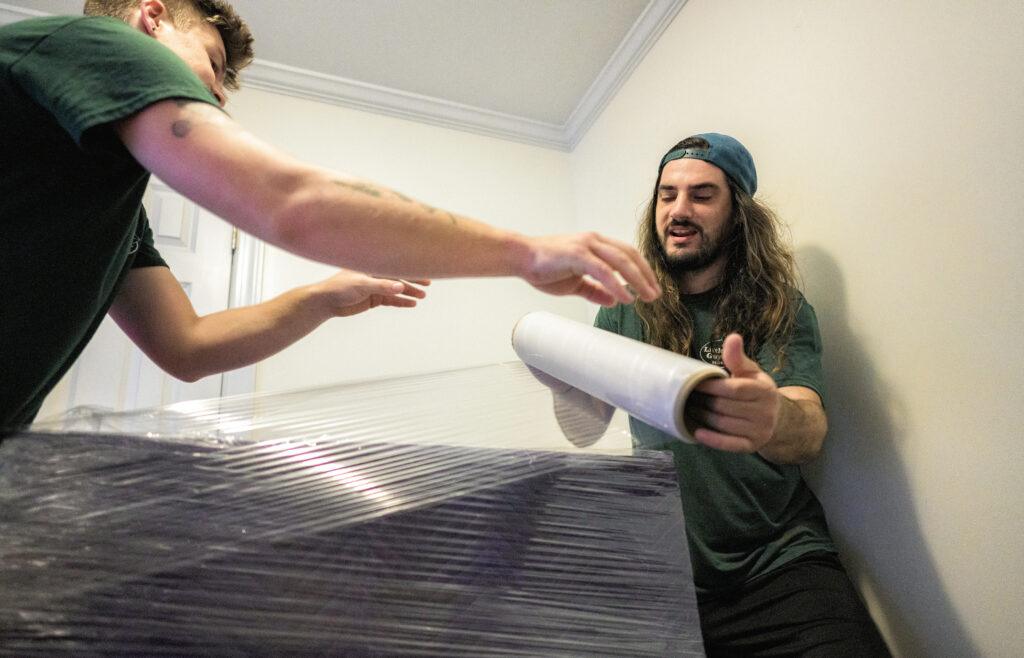
Movers use plastic wrap to help secure furniture and other large items for safe transport. They often combine moving blankets or pads with saran wrap to protect your items throughout the process.
Plastic wrap has significant drawbacks, especially with certain materials and in specific conditions. In humid environments, plastic traps moisture, creating a breeding ground for mold and mildew. Materials like leather and wood are permeable and require air movement to evaporate any moisture. They may damage delicate surfaces when applied directly and create environmental waste.
Alternatives include reusable and recyclable items. These include:
- Moving pads and blankets
- Straps, ropes, and bungee cords
- Reusable silicone or heavy-duty rubber bands
- Household linens
- Honeycomb paper or corrugated cardboard
- Reusable boxes or plastic tubs and crates
7. Moving Day Itself
Moving day should be nearly stress-free if you hire the right team to help you move. All the packing is done, and all that’s left is for you to stand around awkwardly while the movers sweat.
Most people have no clue what you’re supposed to do while movers move your stuff. It’s best to stay out of the way, but close enough to answer any questions along the way. Offer some cold drinks and easy snacks to keep the crew hydrated and energized. Keep your kids and any pets in a contained area away from the action. To keep things secure, keep your wallet, medications, and important documents with you.
A clear weather day is ideal, but in the case of light or moderate precipitation, professional movers will keep on keeping on. They’ll take extra precautions to protect your belongings, but the move should continue as scheduled.
In severe or dangerous weather, your crew will contact you directly about any adjustments.
8. Common Moving Mistakes to Avoid
Here are the most common moving mistakes to avoid.
Planning and Logistics
- Waiting too long to book movers
- Not researching your moving company
- Procrastinating the planning process
- Not decluttering before packing
- Forgetting to update your address
- Leaving utilities until the last minute
Packing Errors
- Underestimating packing time
- Overpacking boxes
- Poor labeling
- Skipping an essentials bag
Moving further than just around the block? Use our Moving Out of State Checklist to get you prepared!
Let Little Guys Movers help you avoid the stress and enjoy your move!
With over 30 years in the business, Little Guys Movers has the experience to help your move go as smoothly as possible. From full-service packing to cross-country moving, we can handle it. No move is truly stress-free, but our courteous, professional crews will make your moving day feel like a celebration!
Ready to Move? We've Got You Covered.
Whether you're ready to book or just have questions, we're here to help.
FAQ
How long before a move should you start packing?
Start packing non-essential items six to eight weeks before moving day. This gives you time to ensure a smooth transition, pack adequately, and plan your move.
What items will movers not take?
Movers won’t take hazardous chemicals, weapons, ammunition, perishables, and items that could be easily damaged in the process.
Are you supposed to empty dressers for movers?
It depends on the contents. Light clothing is usually fine to leave in dressers, but remove heavier loose items before the furniture goes.
What is the hardest room to pack when moving?
Because of the number of awkwardly shaped, fragile items, the kitchen is almost always the hardest room to pack.
What are the drawbacks of using plastic wrap for moving?
Plastic wrap can damage delicate surfaces and create a breeding ground for mold and mildew. Make sure to pre-wrap susceptible pieces of furniture with pads or moving blankets to avoid damage.
What are common moving mistakes?
Common moving mistakes include not planning early enough, underestimating how long it will take, overestimating how much you can move on your own, and not booking movers soon enough.