Quick Answer: The mortgage lock-in effect happens when your current mortgage rate is so much lower than today’s rates that selling and buying again would cost hundreds more a month, so millions of homeowners are staying put instead of moving. As of Q4 2025, just over half of all outstanding mortgages carried rates below 4%. And the gap is keeping people in homes far longer than they used to, an average of 15 years now. This is up from about 6 years in the 2000s. Built-up equity or a big enough life event can still make a move worth it even at today’s rates.
Economists around the U.S. love to talk about the mortgage lock-in effect. It’s all over the news, YouTube, and Reddit. And, as mortgage rates camp out between 6.3% and 6.7%, the effect on the housing market is playing out in real time.
From historic lows in 2020, rates have more than doubled in the last several years. Paired with rising housing prices nationwide, the cost of purchasing a home is up by more than 26%. Add in a bleak economic outlook, and folks who might have sold their homes and moved on already are stuck.
Buyers looking to get into a home are staring at mortgage rates, hoping they’ll come down. Sellers, however, are facing the opposite problem. They’ve got a sweet deal on their mortgage rate and won’t get anywhere close with new financing.
The financial picture doesn’t make sense for most potential buyers trying to trade up or break in. Homeowners today are staying put far longer than they used to, and for good reason. The math of trading a low rate for a new one rarely makes sense. In the past, a starter home was a five- to seven-year stop on the way to a new, bigger home. For those who purchased a starter home in 2020 or 2021, the clock is ticking. It’s time to move, but a golden handcuff mortgage keeps them stuck.
Ultimately, the decision to sell is financial, and the math doesn’t add up for savvy homeowners.
What Is the Mortgage Lock-In Effect?
In 2021, mortgage rates fell to a low of 2.65% before the Fed stepped in and raised rates to combat inflation. Home prices spiked as available inventory plummeted, compounding the problem facing new home buyers.
Homeowners who bought before prices and interest rates rose are deep in the mortgage lock-in effect. In essence, they’re disincentivized to sell because their current interest rate is much lower than today’s. Buying a new home, even a comparable one, is more expensive than before.
Moving for anything other than necessity seems financially irresponsible, especially given the statistics.
- 50.6% of all outstanding mortgages carry rates below 4%, as of Q4 2025
- 1 in 5 are below 3%
Homeowners in these categories are locked in because purchasing at new interest rates doesn’t make financial sense. In the past, they might’ve moved on. But getting back into the market now, when rates are potentially double, is a hard pill to swallow.
It’s not only a spreadsheet problem, either. A 2025 Bankrate survey found that 54% of U.S. homeowners said they wouldn’t feel comfortable selling their home at any of today’s mortgage rates. For more than half of homeowners, lock-in has become as much a mindset as it is a math problem.
And the math itself is steeper than it might look at first glance. While the gap may look like just $500 to $600 a month on paper, the actual amount is higher for the typical homeowner moving today. They’ll see an increase of about $682 more per month in principal and interest alone. Stretched across a 30-year loan, that’s tens of thousands of dollars in additional cost for a comparable home.
Why Homeowners Are Staying Put Longer Than Ever
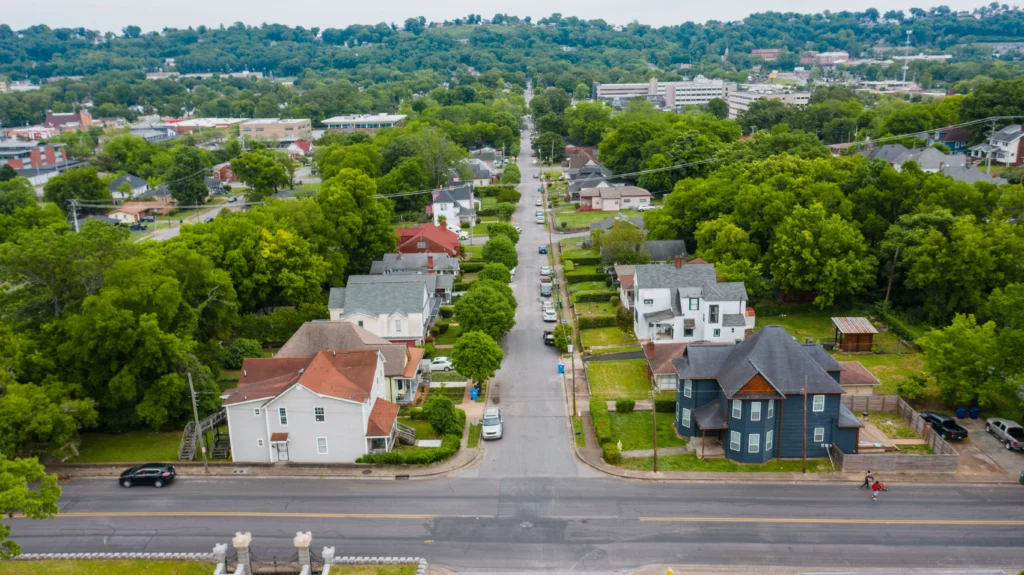
Mortgage lock-in isn’t just changing the math on any single move. It’s also changing how long people stay in a home before they move. The jump to 15 years is a fundamental shift in how Americans think about buying a home. A starter home used to be exactly that: a starter. Now that starter home is doing double duty as a forever home for a lot more buyers than originally planned.
Signs the Lock-In Is Starting to Loosen
In 2026, around 21% of homeowners held mortgages above 6%, surpassing those with a rate below 3% for the first time. These “golden handcuff” loan rates were too good to leave behind when the alternative was double the rate. As this group shrinks, the math starts to make more sense on higher-rate loans.
The real story, though, is that life events are beginning to override the financial math that kept folks locked in. Younger homeowners need more space for kids. Job changes requiring relocation force the issue. Family structures changing due to divorce, empty-nesting, or retirement also necessitate change.
At some point, the starter home or palatial estate stops making sense. Rates aside, life happens.
How This Plays Out Closer to Home

National averages only tell part of the story. Lock-in is loosening at different speeds depending on where you live, and that’s especially true across the markets Little Guys Movers serves.
Texas is a good example. Even with rates holding above 6%, Texas saw record seller activity in 2024 and 2025, driven largely by existing homeowners choosing to sell despite the higher rates. Price gains, life events, and simple market adjustments are pushing more Texas sellers to list, even while the rate math remains unfavorable on paper.
That regional easing shows up in inventory numbers, too. As of June 2026, active housing inventory in 17 states has climbed back above pre-pandemic 2019 levels. Every state in our service area is on that list. That’s a meaningful signal: homeowners across our footprint are listing homes at a pace that outstrips much of the rest of the country, even with today’s rates.
Nashville is the exception worth watching. Continued corporate relocation activity from major employers has kept Nashville’s own inventory tighter than the statewide trend. Lock-in can be loosening at the state level while a strong local job market keeps a specific metro competitive and tight regardless.
For homeowners in our markets, that means the math is shifting in real time and looks different city to city. If you’re on the fence, current local inventory and days-on-market in your specific neighborhood will tell you more than the national headlines will.
When the Math Stops Mattering
When events force your hand, rates and monthly payments hold less weight in the daily calculus of life. For this group of homeowners, moving isn’t a choice anymore.
Staying put because of the mortgage lock-in effect has consequences for some. Passed-up job opportunities, a home that’s too big or too small for your lifestyle, or a climate that no longer supports your way of life are all trade-offs.
Ready to Move? We've Got You Covered.
Whether you're ready to book or just have questions, we're here to help.
Does It Ever Make Sense to Move Anyway? Running the Numbers

Life events aside, there’s one lever that can make a higher-rate move pencil out even without a life event forcing the issue: equity.
Here’s a simplified version of the math. Say you owe $300,000 on a home now worth $500,000. Selling nets roughly $200,000 in equity before closing costs and agent commissions, which typically run 5 to 6% of the sale price, still leaving a substantial chunk of cash. Put that toward a new $500,000 home, and you might only need to finance $320,000 to $350,000 instead of the full purchase price. A smaller loan balance at today’s higher rate can land a lot closer to your old payment than a buyer putting down a standard 10 to 20% would ever see.
That’s the piece the national averages miss. The $682 typical payment increase cited earlier assumes a fairly standard down payment. Homeowners with a decade or more of built-up equity are working with a very different equation. Sometimes it’s small enough that the payment gap becomes a rounding error next to the reason for moving in the first place.
A rough guide to consider when deciding if a move is right for you. Take your specific payment increase and run it against your actual equity position rather than the national average. If it’s smaller than the value of what you’re gaining, the math may well support the move. If the gap is still wide even after accounting for your equity, that’s usually a sign to wait, refinance later, or consider renovating instead of relocating.
This is general math, not personalized financial advice; everyone’s tax situation, closing costs, and loan terms differ. Run your own numbers with the Mortgage Rate Tool above before deciding either way.

Mortgage Rate Tool
Lay out your loan, see what you're paying for principal & interest versus taxes and insurance, then drag the ruler to test a different rate.
Test a Different Rate
FAQ
What is the mortgage lock-in effect?
The mortgage lock-in effect occurs when a homeowner is disincentivized to sell or refinance because of a low rate. When current rates are significantly higher than their current rate, there’s little reason to take on higher monthly costs beyond life events that force a move.
Is it worth moving if I have a low mortgage rate?
Moving when you have an existing mortgage rate well below the current market rate is tricky. If you’re moving for a new opportunity, it’s likely worth changing. Alternatively, if you have built up significant equity, the cost of relocating is offset, which changes the calculation.
When will the mortgage lock-in effect end?
As long as many mortgages remain well below the current market rate, the effect will stay in place. However, in recent years, the percentage of existing loans at 3% has declined significantly, softening the impact of the mortgage lock-in effect.
What percentage of homeowners have mortgage rates below 4%?
Just over 50% of homeowners have mortgage rates below 4%. Specifically, 50.6% of all outstanding mortgages carry a rate below 4% as of Q4 2025, according to the Federal Housing Finance Agency, and roughly 1 in 5 homeowners have an ultra-low rate below 3%.
How long are homeowners staying in their homes now?
The median homeowner now expects to stay in a purchased home for about 15 years, according to 2025 data from the National Association of Realtors. That’s up from roughly 6 years during the 2000 to 2008 period, reflecting how much the lock-in effect has slowed turnover.
Read More About…
- Renting Your Way to a Move: How to Break Free From the Lock-In — a strategy for moving without giving up your rate
- Moving When You’ve Been in Your Home for 10+ Years — what to expect if lock-in has kept you in place longer than planned
- Residential Moving — full-service support whenever you’re ready to make the move
What Happens When You Decide to Move Anyway
Despite Fannie Mae’s 2026 forecast, mortgage rates are projected to hover between 6.3% and 6.4% through the end of the year. Rates could dip below that level in 2027, but market volatility is tied to global events. Stability translates to lower rates, unpredictability to higher.
Regardless of the rates, the hardest part of your transition to a new home doesn’t have to be the move.
Little Guys Movers supports your transition with a full suite of residential moving services. From full-service packing/unpacking to simply helping you load or unload, we do it all.
Our crews are dedicated to taking the stress out of a stressful situation, every time.
Ready to Move? We've Got You Covered.
Whether you're ready to book or just have questions, we're here to help.