
Most people who haven’t been to Waco think they know what to expect. They picture HGTV, the Silos, shiplap. And yes, Chip and Joanna Gaines have had an outsized impact on this city. What they’ve done for Waco’s visibility and downtown investment is real and measurable. But Waco was a city worth living in long before Fixer Upper put it on a national radar, and it remains one for reasons that have nothing to do with home décor television.
Waco sits at the geographic heart of Texas, exactly halfway between Dallas and Austin on I-35. It has Baylor University, one of the country’s largest private Christian universities, and Cameron Park, one of the state’s best urban parks. And the manufacturing and food production economy has stayed steady through cycles that have whipsawed bigger Texas metros. And its cost of living keeps homeownership attainable.
We’ve been moving families in and around the Waco area for years. Our crews know these streets, these hills, and the reasons people who come here tend to stay.
Let us give you the honest picture.
Why People Are Moving to Waco, TX
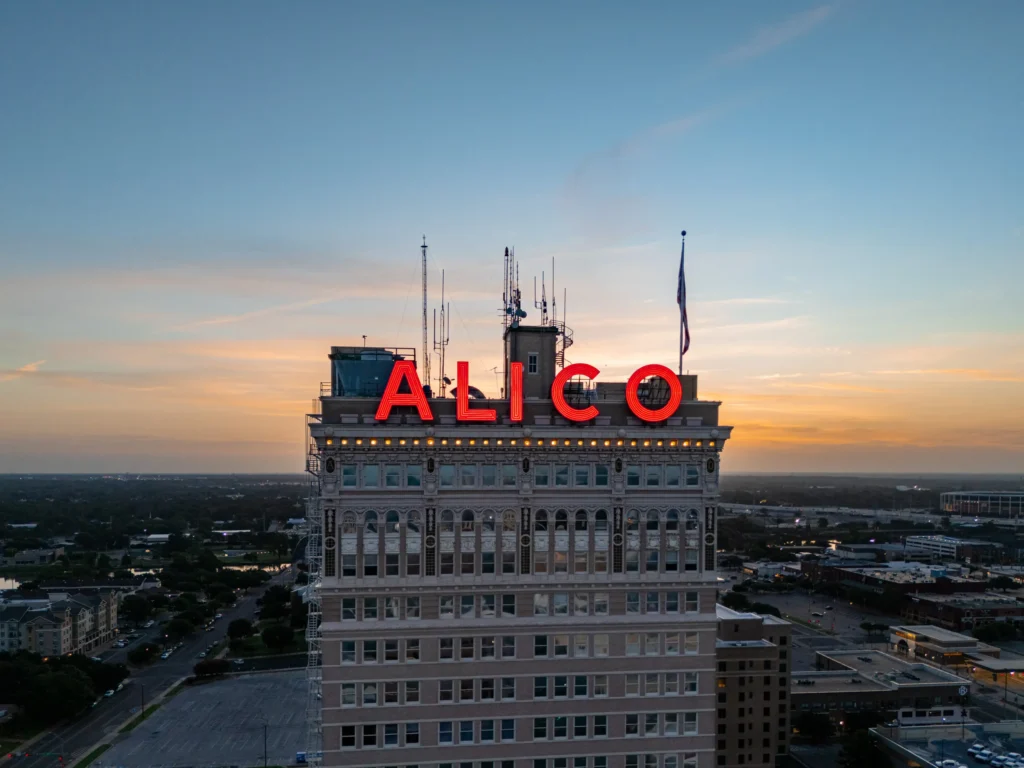
Waco has grown steadily for a decade, driven by a mix of institutional anchors, affordability, and a quality of life that holds up well against what most people are leaving behind.
What’s Driving Growth
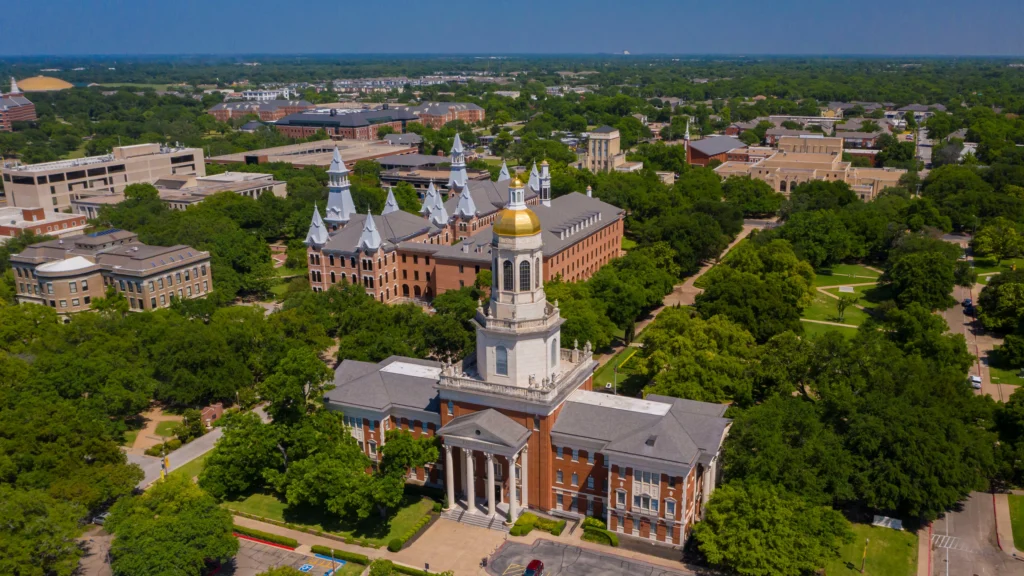
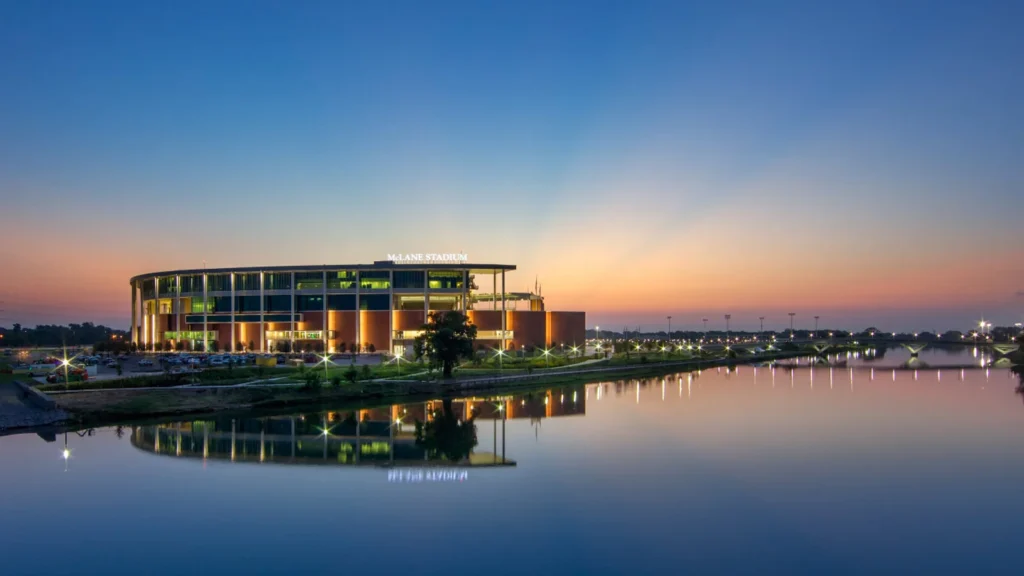
Baylor University is the dominant institutional presence. With enrollment of more than 20,600 students and over 2,000 full-time employees, Baylor is one of the metro’s largest employers. It is also a source of much of the city’s cultural and intellectual energy. The university has invested significantly in its campus and surrounding neighborhoods. McLane Stadium sits along the Brazos, bringing a new sports and entertainment anchor to the riverfront.
The broader economy is more diversified than a university town reputation suggests:
- Manufacturing and food production: Major employers include Mars Chocolate North America, Cargill Foods, Pilgrim’s Global, Sanderson Farms, and Allergan. Manufacturing is a real economic pillar in the Waco metro.
- Healthcare: Baylor Scott & White Medical Center – Hillcrest and Ascension Providence Hospital are two primary hospital systems and among the metro’s largest employers.
- Aerospace and defense: L3Harris Technologies has a significant Waco operation and is part of the city’s growing aerospace cluster at the Waco International Aviation Park.
- Logistics and distribution: Waco’s central I-35 location makes it a natural logistics hub; HEB and other major distributors operate significant facilities in the area.
- Tourism and hospitality: Magnolia Market at the Silos draws more than 3 million visitors annually to downtown Waco, and the ripple effect on hotels, restaurants, and retail has been substantial. The Dr Pepper Museum, Texas Ranger Hall of Fame, and Waco Mammoth National Monument add to a tourism economy that supports thousands of jobs.
Texas has no state income tax, and McLennan County’s cost-of-living advantage compounds that benefit for anyone relocating from a higher-cost metro.
Quality of Life Factors
The job market spans healthcare, education, manufacturing, logistics, aerospace, and a growing hospitality sector. Waco’s average commute time of under 16 minutes is among the shortest in Texas, a quality-of-life factor that doesn’t get enough attention in relocation discussions.
Outdoor recreation centers on Cameron Park, with more than 400 acres of rugged terrain along the Brazos and Bosque Rivers. The park features cliffs, bluffs, panoramic views, hiking trails, mountain biking, disc golf, and a creek system. Casual walkers and serious trail runners alike take advantage of the varied terrain. Waco Lake offers boating, fishing, swimming, and camping. The Carleen Bright Arboretum in Woodway is a hidden gem worth knowing about.
The cost of living in Waco runs approximately 10-14% below the national average. Housing costs are approximately 19-30% below national averages depending on the measure. Median single-family home prices sit around $240,000-$270,000, dramatically lower than Austin, Dallas, or Houston. Rents are similarly attractive: two-bedroom apartments average well below $1,200 per month in most parts of the city.
Food and culture have deepened considerably over the past decade, with the downtown revival extending well beyond the Silos. Vitek’s BBQ has been a Waco institution for decades. Common Grounds is a coffee institution that defines the Baylor-area scene. The Waco Hippodrome is a beautifully restored 1913 theater hosting concerts and events downtown. Dichotomy Coffee & Spirits has become one of the most-visited independent spots in the city. And the broader dining scene along Austin Avenue and the Brazos Riverfront has more range than visitors expect.
What Are the Best Neighborhoods in Waco, TX?
Waco’s neighborhoods reflect the city’s layered history. A prosperous early-20th-century city, devastated by a 1953 tornado that leveled much of downtown. After the devastation, a long rebuild, there is now a sustained revival anchored by Baylor and the Magnolia Market. That arc explains why some neighborhoods have deep architectural character while others are newer and more suburban.
Castle Heights: Waco’s Most Storied Residential Neighborhood
Character: Castle Heights sits minutes from downtown. Tree-lined streets are full of craftsman bungalows, Tudor revivals, and colonial-style homes built primarily in the 1920s through 1940s. It survived the 1953 tornado and decades of disinvestment with its architectural character largely intact. It’s now one of the most sought-after addresses in the metro.
Median home price: $280,000-$500,000
Who lives here: Baylor faculty and administrators, professionals, young families with an eye for architecture, and long-time Waco residents who know what Castle Heights represents. The neighborhood has an active association and a strong sense of community identity.
What makes it special:
- Architecture: The concentration of 1920s-1940s craftsman, Tudor, and colonial homes gives Castle Heights a visual character that newer neighborhoods can’t replicate; the streetscape stands apart
- Proximity to downtown: Walking distance to Austin Avenue, the Brazos Riverfront, and Magnolia Market; a short drive to Baylor
- Cameron Park access: The park’s trail system is accessible from the neighborhood’s western edge
- Community identity: One of Waco’s most active neighborhood associations, with regular events and a residents-know-each-other culture that’s hard to find in newer developments
Worth knowing: Older homes carry older systems. Budget for HVAC, electrical, and plumbing updates when evaluating homes from the 1930s and 1940s. Parking near downtown can be tight during Magnolia events and Baylor home games. Some streets also have significant elevation changes due to Waco’s hilly west-side terrain, which affects both daily life and moving logistics.
Woodway: Waco’s Premier Suburban City
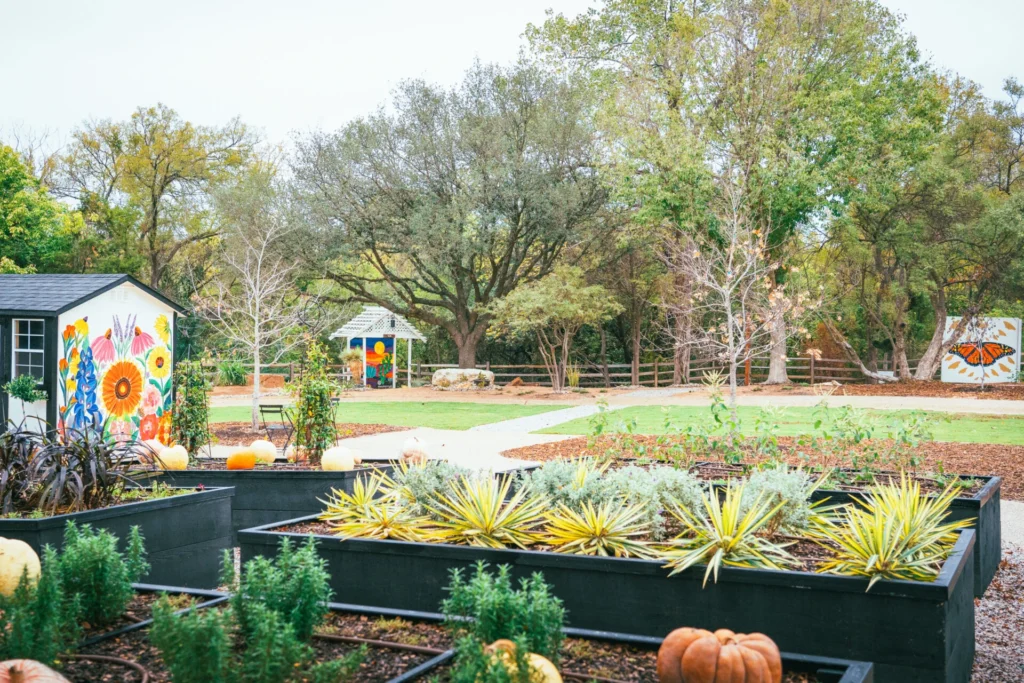
Character: Technically its own incorporated city, Woodway sits just southwest of Waco and functions as the metro’s most polished suburban address. Oak trees, large lots, quiet streets, and a crime rate more than 50% below the Texas average make it consistently one of the top-rated communities in the Waco area. The Carleen Bright Arboretum sits within city limits.
Median home price: $350,000-$600,000 (luxury properties exceed $1M)
Who lives here: Established professionals, physicians, executives, families with school-age children, and retirees who want the best of Waco’s quality of life without the urban density.
What makes it special:
- Safety: Crime rate among the lowest in the metro; consistently top-ranked in regional safety comparisons
- Schools: Woodway residents access Midway ISD, one of the most respected school districts in Central Texas
- Carleen Bright Arboretum: 34 acres of themed gardens, trails, and event space within walking distance for many residents
- Tree coverage and lot sizes: Mature oaks and large lots give the neighborhood a spatial quality that newer developments can’t deliver
- Proximity without congestion: Seven miles from downtown Waco but shielded from the tourist traffic that affects closer-in neighborhoods on Magnolia weekends
Worth knowing: Woodway’s desirability keeps inventory limited and prices firm. The southwest location means slightly longer drives to Baylor and northeast employment corridors. And while Highway 6 provides good regional access, the Lake Waco bridge construction has at times affected east-west travel through this corridor; check current conditions.
Hewitt: Value, Growth, and Family Infrastructure
Character: A fast-growing suburb directly south of Waco with a range of housing price points, solid local amenities, and a community atmosphere that has earned it consistently high marks from residents. Hewitt has grown substantially over the past decade and is one of the more practical landing spots for families and professionals who want suburban comfort at attainable prices.\
Median home price: $260,000-$400,000
Who lives here: Young families, first-time buyers, professionals who want a suburban pace without Woodway’s price premium, and buyers relocating from larger metros who are pleasantly surprised by what their budget buys here.
What makes it special:
- Midway ISD schools: Hewitt feeds into the same highly regarded Midway ISD as Woodway, which is a significant draw for families prioritizing school quality
- Price point: More attainable than Woodway while offering comparable school access and suburban infrastructure
- Parks and recreation: Hewitt Park and several neighborhood parks give the community a walkable outdoor dimension
- Growth trajectory: Active development means newer construction options at multiple price points; buyers get modern systems and floor plans without the full master-planned community premium
Worth knowing: Hewitt’s rapid growth means that some infrastructure, particularly road capacity, is catching up to residential development. Highway 84 and the Hewitt Drive corridor can back up during morning and afternoon rush. And the active construction means some neighborhoods are still establishing their final character.
Downtown Waco / Baylor Area: Urban Energy and the Magnolia Effect
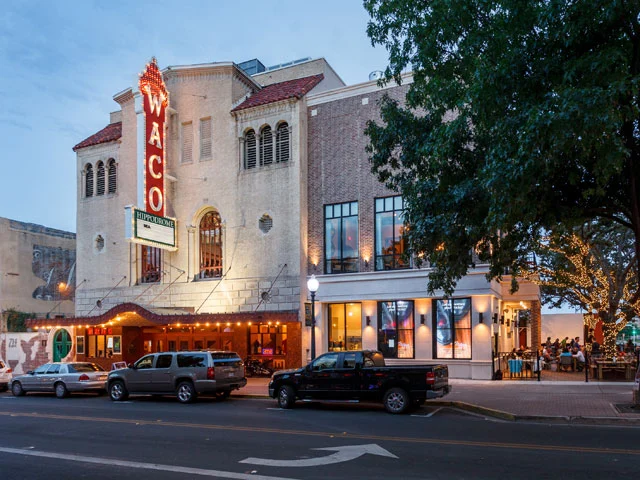
Character: The core of Waco’s revival, the downtown and Baylor-adjacent corridor has been transformed over the past decade. A combination of Baylor investment and the Magnolia Market’s draw, along with a wave of independent shops and eateries, enriches the area. Residential options range from historic homes near the Baylor bubble to newer mixed-use developments near the Silos.
Median home price/rent: $180,000-$350,000 for homes near campus; apartments from $900-$1,500/month
Who lives here: Baylor students, young professionals, faculty who want walkable access to campus, empty nesters drawn by the downtown renaissance, and investors who recognized the trajectory early.
What makes it special:
- Magnolia Market at the Silos: A national destination in your neighborhood; also means strong local retail, dining, and hospitality infrastructure
- Baylor proximity: Walking or biking distance to campus, McLane Stadium, and the riverfront
- Waco Riverwalk: The Waco Riverwalk connects downtown to McLane Stadium and Cameron Park along the river
- Dining and nightlife: The most concentrated independent restaurant and bar scene in the metro; Common Grounds, Dichotomy, Vitek’s, and dozens of others within easy reach
Worth knowing: Downtown Waco is a tourist destination. It’s what makes it exciting and what makes weekend parking and traffic challenging. The Silos area can be significantly congested on weekend afternoons. Some blocks near the Baylor perimeter have the noise and turnover common to university-adjacent neighborhoods everywhere.
China Spring: Space, Land, and Hill Country Character
Character: A community northwest of Waco that offers a distinctly different lifestyle from the urban and suburban options closer to the city center. Rolling hills, larger properties, creeks, and wildlife give China Spring a Hill Country character that fits buyers who want land and a quieter pace while keeping Waco within a reasonable commute.
Median home price: $300,000-$500,000 (with larger acreage properties significantly higher)
Who lives here: Families who want space and land, buyers with horses or livestock, professionals with flexible schedules who prioritize property size over proximity, and people relocating from rural backgrounds who want to maintain that character near an urban center.
What makes it special:
- Lot and acreage options: Some of the only large-parcel residential opportunities within a reasonable Waco commute distance
- Natural setting: Rolling terrain, trees, and creek systems that feel nothing like suburban Waco
- China Spring ISD: A well-regarded small-district school system with a community feel that larger districts can’t replicate
- Price per acre: Significantly more land per dollar than anything comparable in Austin or DFW
Worth knowing: China Spring is rural in character, which means daily life is car-dependent. The commute to central Waco runs 20-30 minutes depending on destination and conditions on Highway 84. And rural properties come with well, septic, and utility infrastructure considerations that buyers from urban environments sometimes underestimate.
Other Neighborhoods of Note
Cameron Park: An established mid-century neighborhood in central Waco with a mix of ranch homes and traditional construction, active neighborhood associations, and an ongoing investment story. More affordable than Castle Heights with a similar community orientation.
North Lake Waco border area: Properties bordering Lake Waco in the northern corridor offer waterfront access and lake views at price points significantly below what comparable waterfront access costs in Austin or Dallas.
Robinson: A small city just south of Waco on I-35 with excellent schools through Robinson ISD, very affordable housing, and a tight-knit community feel. Popular with families who want Midway ISD-level quality in a smaller district.
What Is the Cost of Living in Waco, TX?

Waco is one of Texas’s most affordable mid-size cities. The table below says most of it.
| Category | Waco | Austin | Dallas |
|---|---|---|---|
| Median home price | ~$240K-$270K | ~$530K-$577K | ~$380K-$440K |
| State income tax | None | None | None |
| Average rent (2BR) | ~$950-$1,200/mo | ~$1,700-$1,900/mo | ~$1,400-$1,700/mo |
| Overall cost of living | ~10-14% below national avg | ~3-19% above national avg | Near national average |
Housing costs in Waco run approximately 19-30% below national averages, depending on the measure. That gap is most visible when comparing the neighborhoods: the kind of craftsman bungalow that sells for $800,000 in Austin’s Hyde Park or $600,000 in Dallas’s Lakewood sells for $350,000-$450,000 in Castle Heights. Texas has no state income tax, which compounds the affordability advantage for anyone relocating from California, New York, or Illinois.
Property taxes in McLennan County run higher than the national average, as they do throughout Texas. Factor this into your total housing cost calculation alongside the purchase price.
What to Know Before Moving to Waco, TX
Cameron Park Terrain
Cameron Park is one of Waco’s greatest assets. It’s also terrain that moving trucks need to respect:
- Significant elevation changes throughout the west-side neighborhoods adjacent to the park; some streets have grades that require advance planning for large vehicles
- Castle Heights and surrounding streets near the park bluffs have narrow widths at points and tight turns
- Coordinate with your crew on the specific access route before moving day; our drivers know which approaches work for loaded trucks
The Magnolia Effect on Downtown Traffic

Magnolia Market at the Silos draws more than 3 million visitors annually to a relatively compact downtown footprint:
- Weekend afternoons, especially Saturday from mid-morning through late afternoon, bring tourist-level traffic to the Austin Avenue and Silos area
- Avoid downtown moves on Silobration weekend (October annual event) and other major Magnolia programming dates; check the events calendar before booking
- Baylor home football Saturdays compound the downtown traffic situation; McLane Stadium holds 45,000 and sits along the Brazos near the Riverwalk
I-35 Through Waco
The I-35 corridor through Waco has significant construction and interchange activity that moving trucks need to account for:
- The I-35/US-84 interchange area downtown is one of the more complex routing decisions for large vehicles; plan your approach in advance
- Bridge construction on Highway 6 over Lake Waco has at times reduced lane capacity on the primary west Waco artery; verify current conditions before routing trucks that way
- Morning and afternoon rush hours are relatively mild by Texas standards (Waco’s average commute is under 16 minutes), but the I-35 corridor still backs up during peak periods
Baylor Move-In and Game Days
Baylor’s move-in (late August) and home football Saturdays create two recurring Waco traffic events:
- Move-in (late August): The University Parks Drive and I-35 frontage road corridors near campus back up significantly; if you’re moving near Baylor, avoid the third and fourth weeks of August
- Baylor home football Saturdays: McLane Stadium’s 45,000-seat capacity affects the entire Brazos Riverfront corridor; avoid downtown and riverfront moves on game days
Moving Calendar: When to Move (and When to Avoid)
Best Times
- October-November: Waco’s fall is the sweet spot. Temperatures drop into the 65-80 degree range, humidity breaks, and the city enters its most pleasant stretch of weather. Moving company availability opens up after summer, and pricing reflects it. Just check the Baylor schedule and Magnolia events calendar before booking a downtown move.
- February-March: Pre-summer and before the spring semester end. Good weather, solid availability, and Waco at its most manageable. The wildflower season along I-35 begins in late March.
- December-January: The slowest-moving season in Waco. Pricing is favorable, and scheduling is easy. Waco winters are mild; occasional ice is the one variable to watch.
Times to Avoid
- Silobration (October, downtown Magnolia area): One of the largest annual events in Waco; downtown access is significantly affected.
- Baylor home football Saturdays (September-November): The Brazos Riverfront corridor and downtown are congested; avoid moves in those areas on game days.
- Late August (Baylor move-in): Third and fourth weeks of August; the Baylor-area and University Parks Drive corridors back up.
- July-August peak heat: Waco summers are consistently 95-100 degrees with humidity. Physically demanding for crews, and peak moving season pricing applies.
Things to Do in Waco, But Maybe Not on Moving Day
- Silobration (October, Magnolia Silos; downtown gridlock)
- Baylor Bears home football (Saturdays, September-November, McLane Stadium)
- Heart of Texas Fair & Rodeo (October, Extraco Events Center; fairgrounds area affected)
- Waco Cultural Arts Fest (June, downtown)
- Dr Pepper Museum events (year-round; worth a visit once you’re settled)
Frequently Asked Questions About Moving to Waco, TX
Is Waco, TX a good place to live?
Yes, particularly for families, professionals, and anyone prioritizing affordability without sacrificing quality of life. Waco offers strong employment anchored by Baylor University, healthcare, and manufacturing; one of the lowest average commute times in Texas; a downtown that has revitalized over the past decade; and housing costs that remain well below any comparable Texas metro.
What is Waco, TX known for?
Waco is known as home to Baylor University, the birthplace of the Dr Pepper soft drink, and, more recently, the home of Chip and Joanna Gaines’ Magnolia brand and HGTV’s Fixer Upper. It’s also known for Cameron Park (one of the best urban parks in Texas), the Waco Mammoth National Monument, the Texas Ranger Hall of Fame, and its position at the midpoint of the I-35 corridor between Dallas and Austin.
How affordable is Waco compared to other Texas cities?
Very affordable. Median home prices of $240,000-$270,000 are significantly below Austin ($530,000+), Dallas ($380,000+), and even San Antonio. Rents for two-bedroom apartments average $950-$1,200 per month, well below the national average and roughly half of comparable Austin rents. Overall cost of living runs approximately 10-14% below the national average.
What are the best neighborhoods in Waco for families?
Woodway and Hewitt are consistently the top choices for families, offering access to Midway ISD (one of the most respected school districts in Central Texas), low crime rates, and strong community infrastructure. Castle Heights appeals to families who want character and walkability closer to downtown. China Spring suits families who want land and a rural character within Waco commute range.
How far is Waco from Dallas and Austin?
Waco is approximately 90 miles south of Dallas (about 1.5 hours via I-35) and 90 miles north of Austin (about 1.5 hours via I-35). Its central location makes both metros accessible for day trips, occasional commutes, or weekend visits without requiring a flight.
When is the best time to move to Waco?
October through November and February through March offer the best combination of mild weather, lower moving company demand, and better pricing. Avoid late August (Baylor move-in), Baylor home football Saturdays, Silobration weekend in October, and the July-August peak heat period.
Let Little Guys Movers Make Your Day
We’re biased. We think Little Guys is the best choice when moving to Waco. Whether you’re joining the Baylor community or relocating for a healthcare or manufacturing role, we’ve got you. Discover this city on the Brazos, with a quality of life worth choosing!
Our crews know Cameron Park’s hills, the Silos weekend traffic, the I-35 interchange routing. We know why Castle Heights streets require advance planning for a loaded truck. We’re happy to walk you through any of it before moving day.
Get your Free Quote on our website. Our estimators will be in touch quickly to schedule a walk-through, in person or virtually, for the most accurate estimate.
From the team at Little Guys Movers. Welcome to Waco.
Ready to Move? We’ve Got You Covered.
Whether you’re ready to book or just have questions, we’re here to help.