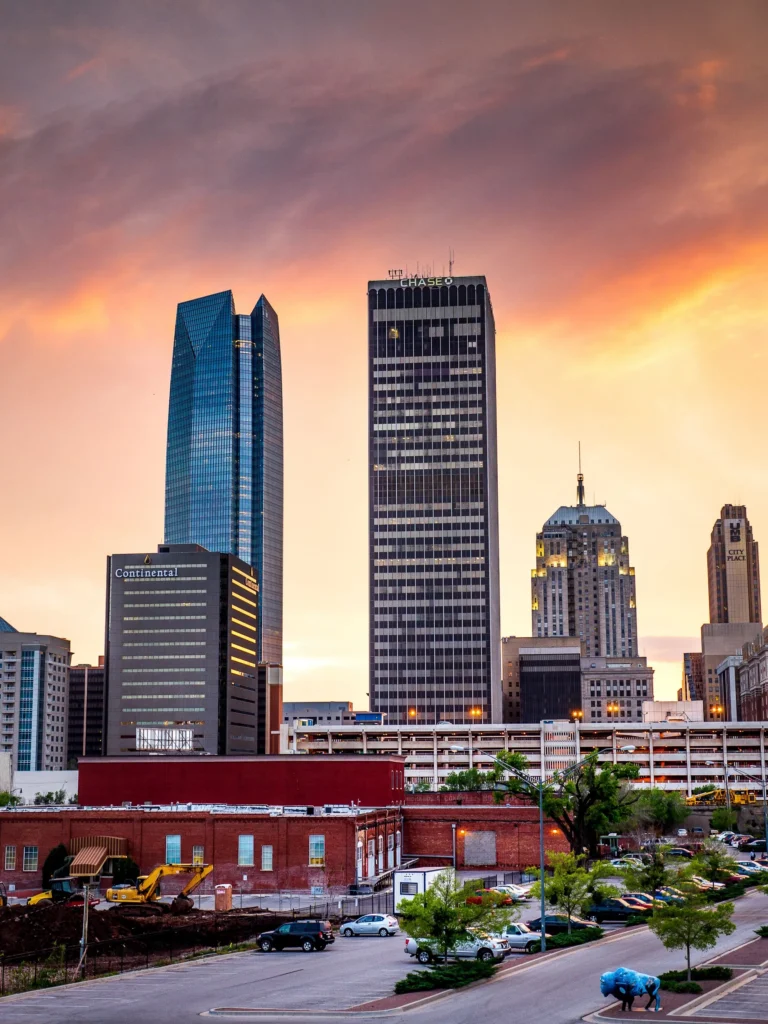
Moving to Oklahoma City? There’s more to this metro than you might expect!
When most people think of Oklahoma City, they think of oil derricks, dusty plains, tornado sirens, and not much else. It’s a reputation issue, not everyday reality. At the heart of OKC’s PR problem is that most people haven’t been there to experience what makes it a great place to live.
People who live here know something different: a city of more than 727,000, with a metro population topping one million. It’s spent the last two decades investing in itself with the kind of intentionality that most metros would envy.
Scissortail Park is a 70-acre urban park that would hold its own in any major city. The food scene is strong. The NBA franchise is beloved. The aerospace economy is one of the most stable in the country. The University of Oklahoma drives innovation, artistic excellence, and economic development for the region.
On top of all that, the cost of living is far below what most out-of-state transplants are used to. For the median home price in the rest of the country, you could buy almost anything on the market.
We serve the entire OKC metro through our Norman and Edmond locations. Between us, we know every neighborhood from Bricktown to the Brookhaven corridor, from Nichols Hills to the south Norman subdivisions.
Let us welcome you to Cinderella City!
Why People Are Moving to Oklahoma City, OK
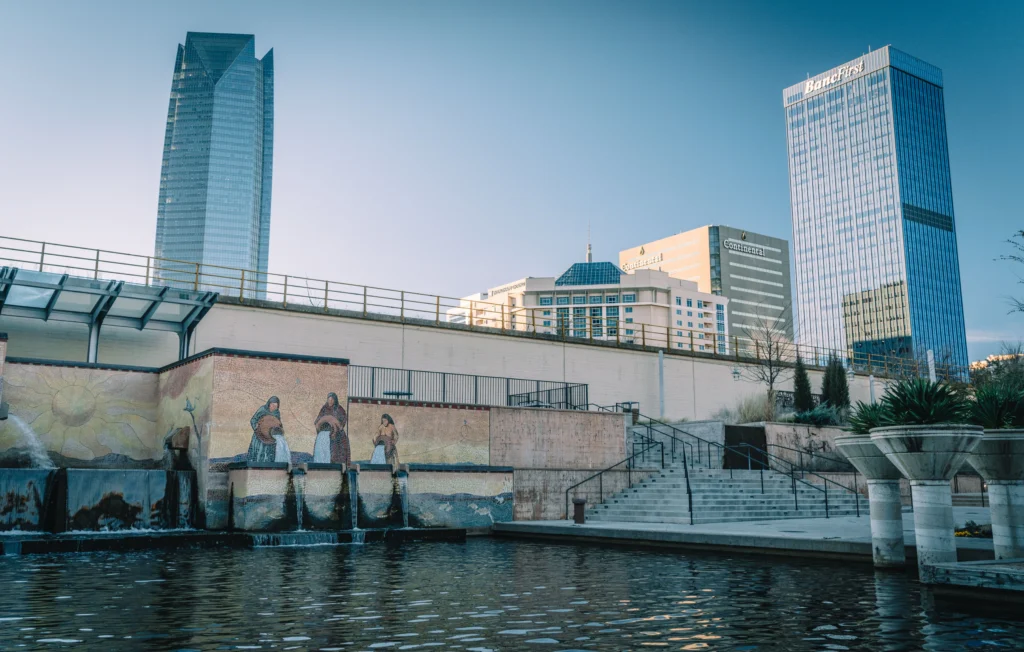
The Oklahoma City metro has been growing steadily for over a decade. That growth is built on foundations that hold up through economic cycles better than most: federal employment, aerospace and defense, healthcare, and energy.
What’s Driving Growth

The single most important economic anchor in the OKC metro is one most people outside Oklahoma don’t fully appreciate: Tinker Air Force Base.
The largest single-site employer in Oklahoma, Tinker employs more than 25,000 military and civilian personnel. All told, it generates $3.6 billion in annual economic output. It is the largest aircraft and jet engine maintenance, repair, and overhaul facility in the United States. To serve these functions, Boeing, Lockheed Martin, Northrop Grumman, Pratt and Whitney, and Kratos Defense all have significant operations orbiting its footprint.
More than 2,900 high-demand job openings are forecast at Tinker for the next few years alone, spanning aircraft maintenance, engineering, logistics, and IT. Aerospace and defense employment across the metro reached 72,400 workers by late 2024, representing more than 43,000 jobs across 290+ firms.
The FAA Mike Monroney Aeronautical Center adds another layer. With 7,500 federal employees and a $1.2 billion annual budget, MMAC is the largest aviation training and logistics center in the country.
For federal aerospace professionals, this is the job market, and worth moving to Oklahoma City by itself.
Other Economic Drivers
Beyond defense and aerospace, people are moving to Oklahoma City for jobs in the following sectors:
- Energy: Devon Energy, Expand Energy, and Continental Resources anchor an oil and gas economy that has diversified significantly since the boom-bust cycles of earlier decades. Oklahoma City is also positioning itself for growth in wind and natural gas infrastructure as the energy transition reshapes the sector.
- Healthcare: OU Health operates the state’s flagship academic medical center. It employs 9,000+ people and supports a growing research enterprise at the OU Health Sciences Center. INTEGRIS Health adds another 6,000+ employees across the metro. Healthcare is among the most stable employment categories in OKC and growing with the population.
- Technology: More than 400 companies employ 30,000+ people in technology, information technology, and software development across the metro. The innovation districts in downtown OKC and Norman’s research corridor are generating startup activity and attracting tech companies looking for affordable talent.
- Government and education: The State of Oklahoma employs 32,500 people; The University of Oklahoma employs approximately 6,000+ faculty and staff on the Norman campus alone, with additional employees across its health sciences and other programs. Government represents about 20% of metro non-agricultural employment, which creates unusual stability compared to privately-driven economies.
- Retail and distribution: Hobby Lobby, headquartered in OKC, employs 4,000+ locally. The metro’s central geographic position makes it a natural logistics and distribution hub.
Oklahoma has no state income tax on Social Security benefits and relatively low individual income tax rates. These factors are especially attractive to military retirees, federal employees, and high earners. Zillow ranked OKC #6 nationally for the metro with the lowest income needed to purchase a home, with the qualifying household income to afford a typical home sitting at approximately $74,732.
Quality of Life Factors
The job market is anchored by federal employment, aerospace, healthcare, and energy, which creates a diversification profile that insulates the metro from the sharp cycles affecting single-industry economies. The unemployment rate has remained consistently below the national average.
Outdoor recreation in the OKC metro has expanded dramatically over the past decade.
- Scissortail Park opened in 2019 and immediately became the city’s signature urban amenity. With 70 acres in the heart of downtown, it features walking trails, a lake, a butterfly garden, an amphitheater, and gorgeous skyline views.
- Lake Hefner on the northwest side offers sailing, running trails, and some of the best sunset views in the metro.
- The Oklahoma River corridor runs through the south side of downtown with a rowing venue and multi-use trail.

Within a two-hour drive, the Wichita Mountains Wildlife Refuge, Turner Falls, and the Arbuckle Mountains add camping, hiking, and swimming to the outdoor options available from OKC.
Cost of Living
The OKC metro’s overall cost of living index sits around 81, 19% below the national average. Average rents across the metro run approximately $1,462 for a two-bedroom apartment, more than 30% below the national average of $2,102. The median home sale price in OKC city proper runs approximately $259,000-$270,000, with the Zillow Home Value Index showing a broader average of $209,117 reflecting a mix of all property types. Premium suburbs like Edmond range from $280,000 to $500,000+.
For families moving to Oklahoma City from the coasts, DFW, or Denver, the numbers are striking.
Food and culture are stronger than most people expect. The metro has been recognized as one of the top food cities in the South.
- The Paseo Arts District is a Spanish Revival neighborhood of galleries, studios, and restaurants.
- The Bricktown Entertainment District runs along the canal with 45+ restaurants, bars, and venues.
- The Midtown restaurant corridor has become one of the most vibrant independent dining scenes in the region.
- The Oklahoma City Museum of Art, the National Cowboy and Western Heritage Museum, and the First Americans Museum highlight cultural depth.
- The OKC Thunder is an NBA franchise with one of the most loyal fan bases in the country, and the Paycom Center hosts concerts, events, and shows year-round.
What Are the Best Neighborhoods in Oklahoma City, OK?
Because the OKC metro is spread across a large geographic footprint, understanding the city’s basic structure helps narrow the search. Downtown and the urban core sit in the center, with Edmond to the north, Norman to the south, and suburban growth pushing in all directions.
The metro is car-dependent by design, though the urban core has improved walkability considerably.
Finding the perfect neighborhood is entirely subjective. What meets your needs might be someone else’s nightmare location. If you’re moving to Oklahoma City, choosing the right spot is essential.
Here’s what we’ve seen after years of moves across the entire metro from our Norman and Edmond locations.
Edmond: The Metro’s Most Decorated Suburb
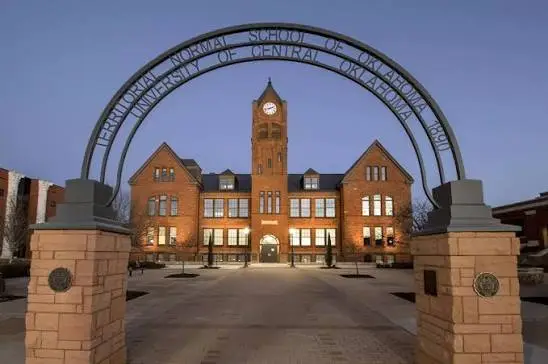
Character: Edmond sits immediately north of Oklahoma City on I-35. It’s built a national reputation as one of the best-run suburban communities in the country. The schools, safety profile, parks system, and community infrastructure have made it the default destination for families relocating to the metro with school-age children.
Median home price: $280,000-$500,000+ (wide range; entry-level to luxury)
Who lives here: Relocating families, Tinker AFB and FAA personnel, medical professionals from the OU Health Sciences Center, corporate executives, and anyone who has done their research on OKC-area school districts and landed here first.
What makes it special:
- Edmond Public Schools: Consistently among the top school districts in Oklahoma, with multiple nationally recognized campuses and strong AP and extracurricular programming
- University of Central Oklahoma: Edmond is a true college town in addition to a suburb, with UCO’s approximately 12,500 students giving the city energy and cultural amenities beyond what a purely residential suburb offers
- Safety: Crime rates consistently well below the metro and national average; regularly named one of the safest cities in Oklahoma
- Valencia: A master-planned community in Edmond with 30+ acres of parks, splash pads, and trails that regularly tops metro neighborhood rankings for family livability
- Arcadia Lake: 1,820 acres of lake within Edmond’s city limits, with boating, fishing, camping, hiking, and a 6.5-mile trail system accessible to residents
Worth knowing: Edmond’s desirability keeps prices firm at the upper end of the metro. The UCO area sees some student rental activity that creates neighborhood variability block by block. Broadway (US-77) through central Edmond is the primary commercial artery and backs up during peak hours. And I-35 southbound into OKC during morning rush requires real planning for downtown commuters.
Norman: College Town with Serious Depth

Character: Twenty miles south of downtown OKC on I-35, Norman is home to the University of Oklahoma and has a distinctly different character from the northern suburbs. The Big 12 energy is real, the Campus Corner dining and bar district has been feeding Sooners for generations, and the arts and cultural programming from OU gives the city a breadth that smaller college towns rarely achieve. Norman ranked in the top 25% for most investable cities in America in 2024, and the city’s population crossed 129,000 in the most recent Census estimates.
Median home price: $230,000-$380,000
Who lives here: OU faculty and staff, aerospace and defense professionals working the southern OKC corridor, healthcare workers at OU Medical Center, young professionals who want college-town energy with real employment options, and families who appreciate Norman’s school pipeline and community character.
What makes it special:
- University of Oklahoma: More than 36,000 students, nationally ranked research programs, and an alumni network that runs deep through Oklahoma’s professional and civic leadership
- NOAA National Weather Center: Norman is the center of tornado and weather research in the United States. The National Severe Storms Laboratory and NOAA National Weather Center are both here, employing hundreds of scientists and creating a research ecosystem that connects to OU’s meteorology program. This is one of the most accomplished scientific communities in the country.
- Lake Thunderbird State Park: 6,000 acres of lake and park land 15 minutes from campus with boating, fishing, hiking, and camping
- Affordability: Norman consistently offers more home per dollar than Edmond or the northern OKC suburbs, making it one of the strongest value propositions in the metro for buyers who want quality over prestige
Worth knowing: OU’s calendar shapes Norman’s rhythms significantly. Home football Saturdays from September through November effectively close the city to large vehicle traffic near campus and the Memorial Stadium corridor. OU’s move-in (mid-August) creates a surge in the campus-adjacent rental market. And Norman’s commute north to OKC proper is straightforward on I-35 off-peak but adds 20-30 minutes during morning rush.
Midtown OKC: The City’s Urban Renaissance
Character: Just northwest of downtown, Midtown has undergone the most visible transformation of any neighborhood over the past decade. Renovated bungalows sit alongside new construction. The OKC Streetcar connects it to downtown. A walkable concentration of independent restaurants, craft breweries, cocktail bars, and boutiques has made it the city’s trendiest residential corridor. Midtown was listed among the five fastest-growing neighborhoods in OKC in 2025.
Median home price: $250,000-$500,000
Who lives here: Young professionals, couples, downsizing retirees who want urban energy, and transplants from larger metros who want the lifestyle they’re used to at a fraction of the cost.
What makes it special:
- Walkability: The highest Walk Score of any OKC neighborhood outside of downtown; the OKC Streetcar connects Midtown to the Bricktown entertainment district, the arts district, and the broader downtown core
- Dining and nightlife: The Midtown corridor has a strong concentration of independent restaurants and bars with food quality that has earned regional recognition
- Midtown Park: An anchor green space for weekend farmers markets, community events, and outdoor programming
- Property value appreciation: Midtown has appreciated faster than most OKC neighborhoods over the past five years as demand for walkable urban living has grown
Worth knowing: Midtown’s walkability and urban energy make it the most in-demand urban neighborhood, so pricing has risen significantly from its earlier days. Parking is limited in the more commercial blocks. Some streets still reflect the neighborhood’s pre-revival character; due diligence block by block is important. And the OKC Streetcar, while useful, is not a substitute for a car in a city as spread out as OKC.
Nichols Hills: Oklahoma City’s Established Prestige Address
Character: An independent municipality entirely surrounded by the city, Nichols Hills has been the most prestigious residential address in the metro since the 1920s. Rolling hills, mature oak trees, larger lots, and a cohesive upscale residential character distinguish it from every other neighborhood in the city. The Nichols Hills Plaza shopping district gives it a walkable retail anchor that most OKC neighborhoods lack.
Median home price: $500,000-$1.5M+
Who lives here: OKC’s established professional class, energy executives, physicians, attorneys, and legacy Oklahoma City families. Nichols Hills has the low-turnover character of a neighborhood where people stay.
What makes it special:
- Oklahoma City Golf & Country Club: A private course that serves as the neighborhood’s social anchor for many residents
- Tree coverage and terrain: The mature oaks and rolling topography give Nichols Hills a visual character unlike anything else in the metro
- Independent municipality: Nichols Hills has its own city government, police force, and services, which gives residents a level of community control and consistency uncommon in a suburb this close to a major city
- Nichols Hills Plaza: An outdoor shopping and dining destination within the neighborhood, including locally owned restaurants and boutiques
Worth knowing: Entry into Nichols Hills is limited by inventory; the neighborhood is small, and homes are rarely available. The price point requires a clear financial plan. And the independent municipality structure means Nichols Hills residents pay both OKC and Nichols Hills taxes for different services.
Bricktown and Downtown OKC: Urban Living at the Core
Character: Downtown OKC has been in sustained revival mode since the MAPS (Metropolitan Area Projects) program launched in the 1990s. and the cumulative investment now shows. Bricktown’s historic warehouse district runs along the canal with over 45 restaurants, bars, and entertainment venues. The new Chickasaw Bricktown Ballpark hosts the Oklahoma City Comets, the Triple-A affiliate of the LA Dodgers MLB team. Scissortail Park anchors the southern edge of downtown.
Median home price/rent: Apartments from $1,000-$1,700/month; condos and lofts from $200,000-$500,000+
Who lives here: Young professionals, empty nesters, government and healthcare workers employed downtown, and people who specifically want urban living in OKC and have done the research to find it.
What makes it special:
- Scissortail Park: 70 acres of park in the heart of downtown with trails, a lake, a butterfly garden, and an amphitheater; it has changed the appeal of downtown living considerably
- Paycom Center: The Thunder’s arena and OKC’s premier concert venue, walking distance from most downtown residential addresses
- First Americans Museum: A nationally significant museum honoring the 39 federally recognized tribes of Oklahoma; opened in 2021 and consistently draws strong reviews
- The Bricktown Canal: An Oklahoma River tributary running through the entertainment district; restaurants, water taxis, and a walkability that functions differently from most OKC corridors
- Affordability vs. peer cities: A two-bedroom in downtown OKC averages $1,463/month, roughly half what comparable units cost in downtown Nashville, Austin, or Dallas
Worth knowing: Downtown OKC’s property crime rate is higher than in suburban neighborhoods. Parking is a daily consideration. The energy can make some blocks less quiet than suburban alternatives. And while Scissortail Park and the Bricktown Canal have dramatically improved the pedestrian environment, OKC remains a car-dependent city at the metro scale.
The Paseo Arts District: OKC’s Creative Neighborhood
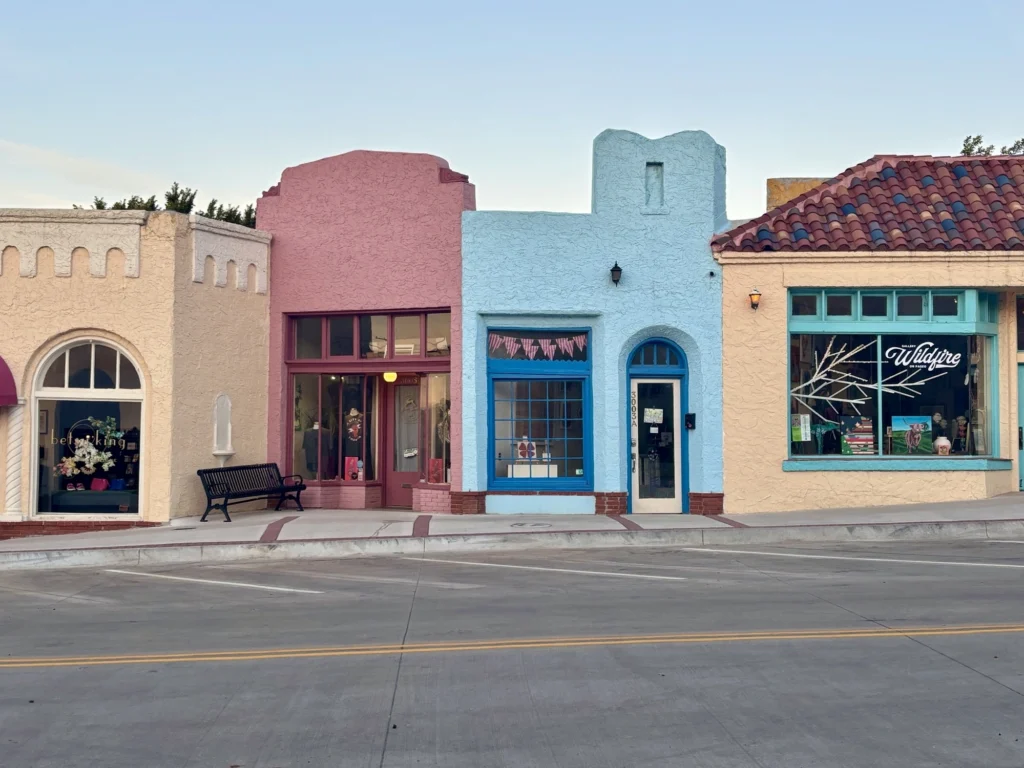
Character: A Spanish Revival neighborhood of 1920s-1930s commercial and residential buildings northwest of downtown. It became OKC’s arts district in the mid-20th century and has never stopped growing. Galleries, studios, independent restaurants, live music, and the Paseo Arts Festival draw visitors year-round. The residential streets surrounding the commercial corridor have distinctive homes and a community identity unlike anywhere else in OKC.
Median home price: $200,000-$380,000
Who lives here: Artists, creatives, young professionals, and buyers who want character and walkability in a neighborhood that hasn’t been entirely gentrified out of affordability.
What makes it special:
- Architecture: The Spanish Revival commercial buildings are one of OKC’s most identifiable architectural collections
- Paseo Arts Festival: Memorial Day weekend event drawing 50,000+ visitors to the corridor
- Affordability with character: More house and neighborhood per dollar than Midtown or Nichols Hills; the Paseo district has independent character and walkable dining at prices that make it one of the better values in the metro
- Restaurant scene: A concentrated cluster of independent restaurants within the district itself, walkable for residents
Worth knowing: Like many arts districts, the Paseo has blocks that are polished and blocks that are works in progress. The neighborhood’s character is its strength; however, buyers should do thorough block-level due diligence. Parking during the arts festival and major events is severely limited.
Other Neighborhoods of Note
Quail Creek: A prestigious north OKC neighborhood built around the Quail Creek Golf and Country Club, with rolling hills, mature trees, and mid-century architecture that gives it a timeless feel. Popular with established professionals and families.
The Heights (Crown Heights, Gatewood, Wilson): Established central OKC neighborhoods northwest of downtown with craftsman and Tudor homes from the 1920s-1940s on tree-lined streets. More affordable than Nichols Hills with comparable architectural character.
Moore: A suburban city between OKC and Norman with affordable new and existing construction, its own school district, and convenient I-35 access. Practical for buyers who want suburban infrastructure at lower price points.
Yukon: A western suburb with strong community character, a growing retail corridor, and one of OKC’s most recognizable small-town identities. Popular with families looking for Edmond-level community without Edmond prices.
Midwest City: Adjacent to Tinker AFB and heavily populated by base employees and contractors. Very affordable, practical, and convenient for anyone working on the east side of the metro.
Ready to Move? We've Got You Covered.
Whether you're ready to book or just have questions, we're here to help.
What Is the Cost of Living in Oklahoma City, OK?
OKC is one of the most affordable major metros in the country. The numbers are hard to argue with.
| Category | OKC Metro | Dallas | Austin | National Avg |
|---|---|---|---|---|
| Median home price | ~$209K-$270K (city); $280K-$500K+ (Edmond) | ~$380K-$440K | ~$530K-$577K | ~$440K |
| State income tax | Low (4.75% top rate) | None | None | Varies |
| Average rent (2BR) | ~$1,462/mo | ~$1,400-$1,700/mo | ~$1,700-$1,900/mo | ~$2,102/mo |
| Cost of living index | ~85.4 (14.6% below national avg) | Near national avg | Above national avg | 100 |
| Income needed to buy | ~$74,732 (ranked #6 lowest nationally) | Significantly higher | Significantly higher | Varies |
Oklahoma does have a state income tax with a top rate of 4.75%, which is worth factoring in for comparisons against Texas (no state income tax). However, the housing cost differential is so substantial that the tax gap is easily absorbed by the savings on mortgage payments and rent. For military retirees moving to Oklahoma City, Social Security income is exempt from state income tax, which makes OKC particularly attractive for that demographic.
The property tax rate in Oklahoma County runs approximately 0.87-1.0% of assessed value, one of the lowest effective rates in the country and significantly below Texas’s 1.8-2.4% effective rates. On a $250,000 home, expect roughly $2,200-$2,500 annually in property taxes, compared to $4,500-$6,000 on a comparable home in most Texas metros.
What to Know Before Moving to Oklahoma City, OK
Tornado Season: An Honest Assessment
Oklahoma City sits in Tornado Alley, and tornado season is a real part of life here.
Peak tornado season runs from late March through June, with a secondary period in October and November. The OKC metro has been struck by significant tornadoes multiple times in recent decades, including major events in 1999 and 2013. Here is what life with tornadoes actually looks like for residents:
- Storm shelters are standard: Most newer homes and communities in the OKC metro have in-ground storm shelters in garages or storm cellars; ask about shelter availability on any property you’re seriously considering
- Local meteorology is world-class: The NOAA National Severe Storms Laboratory in Norman has made OKC-area weather forecasting among the best in the country; residents get accurate, timely warnings that save lives
- The warning system works: OKC has a comprehensive siren network and alert infrastructure; residents learn the system quickly and treat it seriously
- It’s manageable, not paralyzing: Over 1.5 million people live in the metro area. The key is having a plan, knowing your shelter, and respecting the weather.
Buy a weather radio. Download the NOAA Weather app. Know where your nearest shelter is before April.
The I-35 and I-40 Interchange
OKC’s major highway system runs on two primary interstates: I-35 (north-south) and I-40 (east-west), with I-44 and I-240 completing the ring.
A few practical notes when moving to Oklahoma City:
- The I-35/I-40 interchange near downtown has significant construction activity; lane configurations change, and large trucks need to plan routes in advance
- Morning rush on I-35 southbound (OKC to Norman) and northbound (Norman to OKC) peaks 7-9 am; the same pattern applies to I-44 northwest and I-40 east toward Tinker
- Moving trucks should use I-35 or I-44 bypass routes during the morning rush rather than threading through the downtown interchange
- The Kilpatrick Turnpike (Northwest Expressway) is the fastest route across the north side of the metro and worth knowing for moves between Edmond and the western suburbs
OU and UCO Move-In and Game Days
Two major universities in the metro create two recurring traffic events:
- OU move-in (mid-August, Norman): Campus corridors around University Boulevard, Classen Boulevard, and the Campus Corner district are congested for a full weekend. Book moves near campus before or after this window.
- UCO move-in (late August, Edmond): The University Drive corridor in central Edmond backs up; less severe than OU but worth scheduling around
- OU home football Saturdays (September-November): Memorial Stadium holds approximately 86,000. The entire Norman-to-OKC corridor on I-35 is affected; avoid moves in Norman’s west side and downtown OKC on game Saturdays
- Thunder home games (October-April, Paycom Center): Downtown OKC parking and traffic are affected; plan downtown moves around the Thunder schedule
LGM’s Two-Location Metro Coverage
Our Norman and Edmond locations cover the entire OKC metro with local knowledge from both ends:
- Norman location: Best positioned for moves in Norman, Moore, Midwest City, and the south OKC corridor toward Tinker AFB
- Edmond location: Best positioned for moves in Edmond, north OKC, Yukon, Piedmont, and the northwest corridor
- Downtown, Midtown, and central OKC: Both locations cover the urban core; we coordinate based on your specific address and timing
- Long-distance and out-of-state: Both locations handle full interstate moves with the same crew from origin to destination
Moving Calendar: When to Move (and When to Avoid)
Best Times for Moving to Oklahoma City
- October-November: The optimal moving window. The tornado season has passed, temperatures settle into the 60s-70s, humidity drops, and the fall weather in Oklahoma can be spectacular. Moving company availability opens up significantly, and pricing improves. Just schedule around OU football Saturdays in October.
- February-March (early): Before tornado season begins and before the spring university surge. Good weather, good availability. Watch the calendar in March as severe weather can arrive by mid-month.
- December-January: The slowest moving season and the best for pricing and scheduling. OKC winters are mild with occasional ice events. Actual snow is rare, but ice is the one variable to watch.
- Weekdays: Always preferable for building access, parking near downtown, and avoiding game-day traffic patterns.
Times to Avoid Moving to Oklahoma City
- April-May (tornado season peak): Not a reason not to move, but a reason to build weather flexibility into your plan. Have a backup date and know that a tornado watch or warning may delay your crew. Peak storm season and peak moving season overlap in an unfortunate way.
- Mid-August (OU and UCO move-ins): Both move-ins happen within two weeks of each other. Norman and Edmond are the most affected; city-wide moving company availability tightens.
- OU home football Saturdays (September-November): Norman is effectively impassable near campus; the I-35 corridor is affected throughout the day.
- June-September peak heat: OKC summers are consistently in the 90s-100°F with humidity that makes it feel hotter. Physically demanding for crews, and peak pricing applies through August.
Things to Do in Oklahoma City, But Maybe Not on Moving Day

- OU Sooners home football (Saturdays, September-November, Memorial Stadium)
- OKC Thunder home games (October-April, Paycom Center)
- Paseo Arts Festival (Memorial Day weekend)
- Festival of the Arts (April, downtown OKC)
- Red Earth Native American Cultural Festival (June, downtown)
- TailSpin: A Scissortail Park Music Festival (ongoing free concert series at Scissortail Park)
- Riversport Events (spring and fall, Oklahoma River)
Frequently Asked Questions About Moving to Oklahoma City, OK
Is Oklahoma City a good place to live?
Yes, particularly for families, military and aerospace professionals, healthcare workers, and anyone prioritizing affordability. OKC offers a diversified economy anchored by federal employment, aerospace and defense, healthcare, and energy; a cost of living nearly 15% below the national average; excellent suburban school districts in Edmond and Norman; and a downtown that has transformed over the past 20 years. The honest trade-offs are tornado season, car dependence, and hot summers.
How affordable is Oklahoma City compared to other cities?
Very. The metro’s overall cost of living index sits at 85.4, nearly 15% below the national average. Average two-bedroom rents run $1,462, more than 30% below the national average. Median home prices in Oklahoma City run approximately $259,000-$270,000, with premium suburbs like Edmond ranging from $280,000 to $500,000+. OKC ranked #6 nationally for the lowest income needed to purchase a home. For anyone relocating from Austin, DFW, Denver, or the coasts, the difference is substantial.
What is Oklahoma City known for?
OKC is known as the home of the Oklahoma City Thunder NBA franchise, Tinker Air Force Base (the largest aircraft repair depot in the US), the Oklahoma Land Run of 1889, and a food and arts scene that consistently surprises visitors. It is the capital of Oklahoma and the largest city in the state. Downtown has been transformed by the MAPS civic investment program, Scissortail Park is a 70-acre downtown park that opened in 2019, and the Bricktown Entertainment District draws visitors from across the region. The city also has deep significance as home to the National Memorial site of the 1995 bombing.
What are the best neighborhoods in Oklahoma City for families?
Edmond and Norman are the two strongest options for families at opposite ends of the metro. Edmond offers the top-ranked public school district in the metro, a polished suburban infrastructure, and consistently strong safety profiles. Norman offers the energy of a college town, solid public schools, more affordability, and access to OU’s cultural and athletic programming. Within OKC proper, Quail Creek, The Heights, and the northwest Edmond-adjacent corridor are the most family-oriented options.
Is tornado risk a serious concern in Oklahoma City?
Tornado risk is real and should be taken seriously, not dismissed. Oklahoma City sits in Tornado Alley and has experienced significant tornado events. The key facts: most newer homes have in-ground storm shelters; the NOAA National Severe Storms Laboratory in Norman makes local weather forecasting among the most accurate in the world; and the warning system gives residents meaningful lead time. Millions of people live well in OKC year-round by having a plan, knowing their shelter, and respecting severe weather warnings.
When is the best time to move to Oklahoma City?
October through November is the strongest window: tornado season has passed, temperatures are pleasant, and moving company availability and pricing are both favorable. December through January is the best for pricing and scheduling flexibility. Avoid mid-August (university move-ins), OU home football Saturdays through the fall, and the June-September heat and peak pricing period.
Let Little Guys Movers Make Moving to Oklahoma City a Cinch
We’re biased. We think Little Guys is the best choice when moving to Oklahoma City. Whether you’re moving for a position at Tinker AFB, the University of Oklahoma, OU Health, or one of the rapidly expanding tech employers in the metro area, we are here to support you.
If you’re relocating from the coasts for a more affordable cost of living or simply ready to explore what Oklahoma City has evolved into, we are dedicated to making your transition as smooth as possible.
Our crews know Memorial Stadium’s game day traffic patterns, the OU move-in calendar, and how to navigate the south OKC corridor toward Tinker. We know the UCO corridor, the Arcadia Lake neighborhoods, and how to get through Edmond’s Broadway Street before the morning backup starts. Between our two locations, we cover every ZIP in the metro.
Get your Free Quote on our website. Our estimators will be in touch quickly to schedule a walk-through, in person or virtually, for the most accurate estimate.
From the team at Little Guys Movers, welcome to the Big Friendly.
Ready to Move? We've Got You Covered.
Whether you're ready to book or just have questions, we're here to help.