
Here’s something most people don’t know about Murfreesboro, Tennessee: it was once the state capital. From 1818 to 1826, this Middle Tennessee city served as the seat of state government, and geographically speaking, it still sits at the very center of the state. A stone monument on Old Lascassas Pike marks the official spot.
History aside, what most people moving to Murfreesboro care about is this: it’s 34 miles southeast of downtown Nashville, significantly more affordable, and growing faster than almost any other city in Tennessee. Rutherford County has been adding residents at a rate of roughly 20 people per day. That’s not a typo.
For people relocating to Middle Tennessee, whether for a new job, a Nashville-adjacent lifestyle at a fraction of the cost, or simply the appeal of a city that still has room to breathe, Murfreesboro has become one of the most compelling answers in the region.
We have deep roots in Middle Tennessee. Our Nashville crew has been helping families move in and around this region for years, and Murfreesboro is one of our most active markets. We know these neighborhoods, these roads, and why people who land here tend to put down roots fast.
Why People Are Moving to Murfreesboro, Tennessee
The short version: Nashville prices, without the Nashville prices.
The longer version is more interesting because Murfreesboro has become something more than a bedroom community. It has its own economy, its own identity, and its own reasons to stay.
What’s Driving Growth
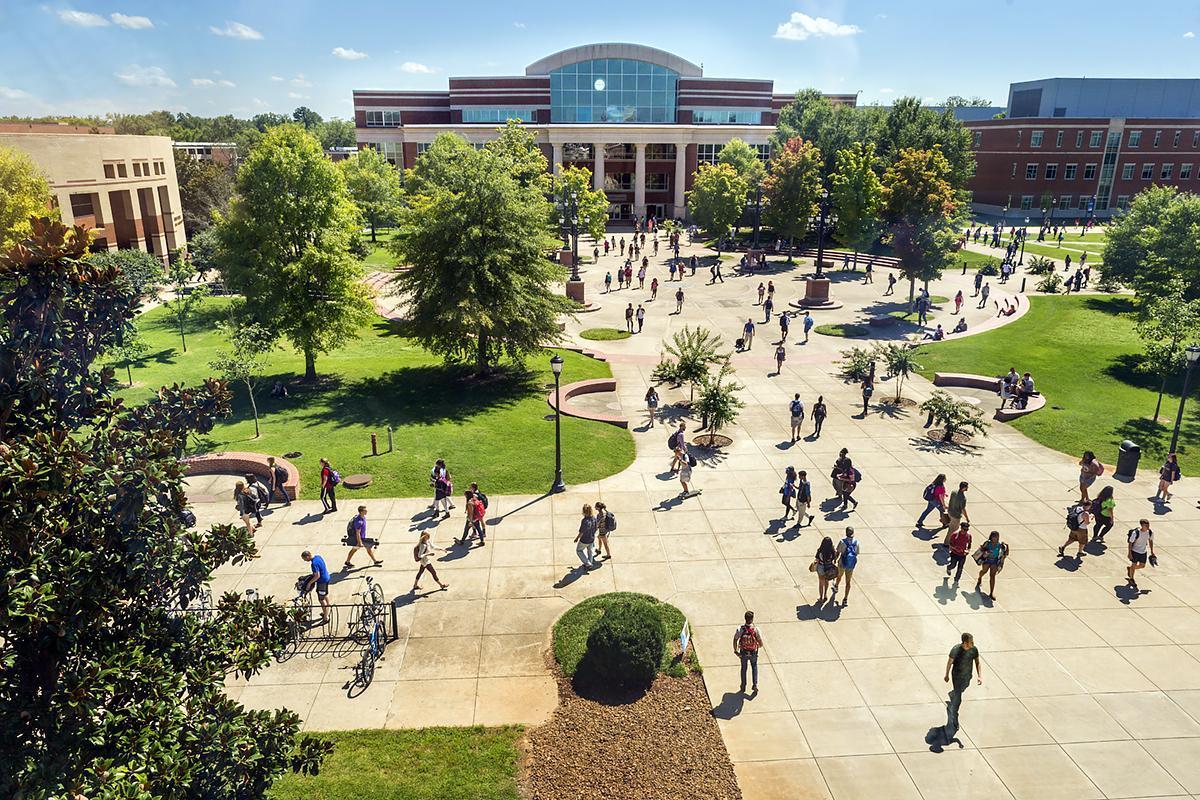
Middle Tennessee State University is the foundation. With the largest undergraduate enrollment in the state at more than 22,000 students, MTSU is Murfreesboro’s second-largest employer and generates hundreds of millions in annual economic impact. The university anchors the city’s talent pipeline, drives demand for housing and services, and gives Murfreesboro a college-town energy that sets it apart from purely suburban alternatives.
Beyond MTSU, the Rutherford County economy has diversified significantly:
- Automotive and manufacturing: The Nissan manufacturing plant in nearby Smyrna is one of the largest automotive manufacturing facilities in North America and one of the region’s largest employers. Cardinal Health, General Mills, and Franke are among the other major manufacturers with operations in Rutherford County.
- Healthcare: Ascension Saint Thomas operates facilities across the Murfreesboro/Smyrna corridor, and the broader healthcare sector has grown substantially as the population has expanded. Vanderbilt University Medical Center extends its reach into Rutherford County through clinics and affiliated providers.
- Logistics and distribution: Rutherford County’s central location, within a 9-hour drive of 50% of the U.S. population, has made it a logistics magnet. Amazon has a significant presence in fulfillment and distribution in the region.
- Advanced manufacturing: In August 2025, a $76.4 million Barrett Manufacturing and Technology Campus broke ground in Murfreesboro, part of a sustained wave of industrial investment in the county.
- Aerospace: MTSU’s aviation program, combined with Murfreesboro Municipal Airport and Smyrna Airport (Tennessee’s busiest general aviation airport), has drawn aerospace and MRO employers to the region.
Additionally, Tennessee has no state income tax, and Rutherford County has maintained a business-friendly posture that continues to attract corporate investment.
The combination of MTSU talent, manufacturing infrastructure, and proximity to Nashville has created an economy that increasingly functions on its own terms.
Quality of Life Factors
The job market spans healthcare, education, manufacturing, logistics, and professional services, creating a diversified base that’s held up better than most comparable metros through national economic cycles.
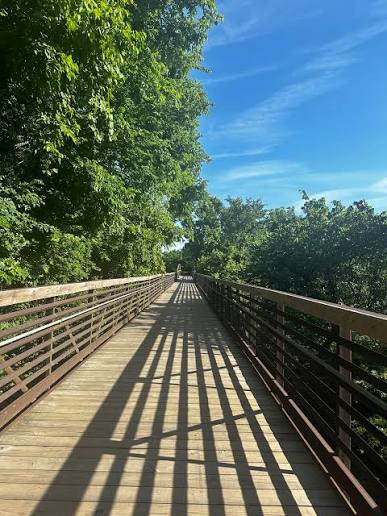
Outdoor recreation in Murfreesboro centers on the Greenway system: 17+ miles of paved multi-use trails that wind along the Stones River. The trails also run through Barfield Crescent Park, one of the finest regional parks in Middle Tennessee, with more than 1,100 acres of trails, disc golf, and natural areas. Stones River National Battlefield preserves 570+ acres of Civil War history with interpretive trails and ranger-led programs. Percy Priest Lake, a 14,000-acre reservoir just west of the city, offers boating, fishing, swimming, and camping.
The cost of living is the headline. Median home prices in Murfreesboro run $370K–$430K, considerably below Nashville proper and dramatically below Nashville’s most sought-after suburbs like Brentwood and Franklin, where comparable homes routinely top $700K–$800K. Tennessee’s lack of a state income tax further stretches that advantage. For families relocating from the Northeast or from higher-cost Sun Belt metros, the numbers are very attractive.
Food and culture have matured alongside the city’s growth. The Square, Murfreesboro’s historic downtown, is a destination for locals and visitors alike. Local restaurants, craft breweries, live music at popular clubs, and Uncle Dave Macon Days, each September. Cannonsburgh Village, a re-created pioneer settlement with 20+ historic structures, hosts seasonal festivals and community events that give the city a sense of place that newer suburbs often lack.
What Are the Best Neighborhoods in Murfreesboro, Tennessee?
Like a thing of beauty, the best neighborhood is always in the eye of the beholder. People at different life stages have different needs, and the perfect house on the perfect street is 100% subjective and possibly doesn’t exist.
That said, here are the Murfreesboro neighborhoods we know best after years of moves.
Historic Downtown / The Square: Murfreesboro’s Urban Core
Character: The oldest and most walkable part of the city. A traditional Southern courthouse square surrounded by local restaurants, coffee shops, boutiques, and a growing creative district. The residential streets radiating from the square have a mix of craftsman bungalows, Victorian-era homes, and newer infill development.
Median home price: $320K–$500K
Who lives here: Young professionals, MTSU faculty and staff, couples who want neighborhood character and walkability, and long-time Murfreesboro families who stay close to the city’s roots. Downtown draws people who have done their homework and know what they’re looking for.
What makes it special:
- The Square: Murfreesboro’s social center with weekly farmers’ markets, seasonal events, live music, and a concentration of locally owned restaurants and bars that feel nothing like chain-suburb dining.
- Cannonsburgh Village: Just steps from the square, a walkable piece of living history that residents treat as a community amenity, not just a tourist attraction.
- Murfreesboro Center for the Arts: Galleries, theatre, and concerts close to the square
- Walkability: Rare for a city this size in Middle Tennessee, with groceries, dining, and entertainment accessible without a car for those closest to the core.
Worth knowing: Some of the older housing stock on streets near the square needs updating, so budget accordingly if you’re eyeing the most characterful homes. Parking near The Square can be tight on event weekends. And MTSU’s proximity means the rental market in this area is active, which keeps the neighborhood lively but also leads to more turnover on some blocks than others.
Blackman Area / Northwest Murfreesboro: Top Schools, New Construction
Character: Murfreesboro’s fastest-growing residential corridor. It’s a broad swath of northwest Murfreesboro anchored by the Blackman school cluster and characterized by newer construction, master-planned communities, and suburban amenities. If you’re relocating with school-age children and want to minimize friction, this is where most corporate relocations land.
Median home price: $400K–$600K
Who lives here: Young families, dual-income professionals, Nashville commuters who’ve decided the I-24 drive is worth the savings, and buyers who prioritize school quality and new construction over neighborhood character.
What makes it special:
- Blackman High School and the Blackman Collegiate Academy: Consistently among the top-rated schools in Rutherford County, with a strong AP and dual-enrollment program.
- New construction inventory: One of the few corridors in the Murfreesboro area with ongoing new builds across multiple price points.
- Veterans Parkway corridor: The retail and dining infrastructure here has caught up to the residential growth for a convenient daily life without driving across town
- Subdivision amenities: Most communities in this corridor feature pools, playgrounds, and walking trails built into the development
Worth knowing: The trade-off for school access and new construction is suburban uniformity. If the craftsman homes near the square appeal to you, this probably won’t. HOA activity is significant throughout the Blackman corridor; review covenants before committing. And I-24 commutes to Nashville, while manageable, are directional, westbound in the morning, eastbound in the evening, and can be slower-moving.
Indian Hills: Golf Course Living with Established Character

Character: One of Murfreesboro’s most established upscale neighborhoods, built around the Indian Hills Golf Course in southeast Murfreesboro. A mix of luxury estates, course-adjacent homes, and single-family properties with mature landscaping that takes decades to grow.
Median home price: $400K–$600K
Who lives here: Established professionals, physicians, executives, and buyers who want an upscale address with long-term neighborhood stability. Indian Hills has the feel of a neighborhood where people stay.
What makes it special:
- Indian Hills Golf Course: An 18-hole course that serves as the neighborhood anchor and social hub.
- Mature landscaping and lot sizes: The tree coverage and property sizes here are quite different from those in newer developments.
- Southeast Murfreesboro access: Proximity to the Stones River corridor and easy routing to I-24 without navigating the northwest corridors.
- Stability: Low turnover, consistent home values, and a neighborhood identity built over decades.
Worth knowing: Some homes in Indian Hills are older and carry the maintenance costs that come with it. The golf club membership is separate from home ownership, and social membership options vary. And while the neighborhood is well-established, some road connections to the city’s growing parts can feel indirect.
Liberty Station / Huntington: Practical Suburban Value
Character: Two adjacent north Murfreesboro neighborhoods that represent excellent value for families and young professionals who want suburban comfort without paying the Blackman premium. Huntington offers larger traditional-style homes; Liberty Station sits along major roadways with proximity to Memorial Boulevard retail and dining.
Median home price: $300K–$500K
Who lives here: First-time buyers, young families, buyers relocating on a defined budget who want solid schools, safe streets, and convenient access to the rest of the city without overpaying for a golf course or a brand-new build.
What makes it special:
- Value: More square footage per dollar than comparable neighborhoods in the Blackman corridor or Indian Hills.
- Rutherford County Schools access: Both neighborhoods feed into solid county school options with multiple high school choices depending on the exact location.
- Memorial Boulevard and US Route 41 access: Easy daily commute routing and convenient retail corridor.
- Community feels: Both Huntington and Liberty Station have enough neighborhood history to have developed a sense of community.
Worth knowing: Liberty Station’s location along major roadways means more traffic noise than you’d find in quieter corridors. Always verify current school zoning before committing, as attendance lines in Rutherford County can shift as growth continues to reshape school capacity.
Other Neighborhoods of Note
Breckenridge: A north Murfreesboro subdivision with large lots, strong HOA involvement, and walkable access to Siegel High School. Popular with families who want the Rutherford County school pipeline and a quieter pace than the Blackman growth corridor.
Smyrna (neighboring city): Technically its own city, but effectively the northern extension of the Murfreesboro market. Home to the Nissan plant, more affordable than Murfreesboro, and increasingly popular with manufacturing employees and buyers priced out of the city’s hotter corridors.
La Vergne: The northern gateway between Murfreesboro and Nashville and one of the most affordable communities in the region, with strong logistics and distribution job access and easy I-24 access for Nashville commuters.
Ready to Move? We've Got You Covered.
Whether you're ready to book or just have questions, we're here to help.
What Is the Cost of Living in Murfreesboro, TN?
Murfreesboro’s cost of living is one of its strongest selling points for anyone relocating from a higher-cost market.
Tennessee has no state income tax, and Rutherford County property taxes are competitive with comparable Middle Tennessee markets. For families coming from the Northeast, California, or high-cost Sun Belt metros, the combination of lower housing costs, no income tax, and Nashville-proximity job access can meaningfully change the financial picture.
What to Know Before Moving to Murfreesboro
I-24 and the Nashville Commute
If you’re moving to Murfreesboro with a Nashville job, I-24 is your life. Here’s what to know:
- Westbound in the morning, eastbound in the evening – the commute is directional and predictable, which makes it manageable but not optional.
- Exit 78 (Medical Center Pkwy) through Exit 74 (S. Church St.) is where congestion builds fastest, so give yourself 45–55 minutes for a Nashville commute during peak hours rather than the 35-minute off-peak time.
- The Joe B. Jackson Parkway interchange (Exit 84) is the newest major addition to Murfreesboro’s highway infrastructure. If you’re moving to the south end of the city, this is often a better approach for large trucks than threading through the older city center corridors.
MTSU Move-In Timing
Middle Tennessee State University’s move-in happens in mid-to-late August. The corridors most affected:
- Middle Tennessee Boulevard (the main MTSU-adjacent artery) backs up significantly during move-in weekend
- S. Church Street and Greenland Drive are the primary student housing corridors and experience a full weekend of congestion
- If you’re moving anywhere within a mile of campus, plan around move-in weekend or expect significant delays
HOA Activity in Northwest Murfreesboro
The Blackman corridor and northwest Murfreesboro’s master-planned communities have some of the most active HOA oversight in the region:
- Most communities require a moving company to provide proof of insurance before approving access
- Many restrict moving truck staging to specific areas, so check with management in advance
- New construction neighborhoods often have temporary access restrictions during active build-out phases. Verify current site conditions with your builder or HOA.
Moving Calendar: When to Move to Mufreesboro (and When to Avoid)
Best Times
- October–November: Middle Tennessee’s fall is one of its best-kept secrets. Temperatures drop into the 60s–70s°F, humidity disappears, and the hardwood corridors throughout the city turn. Moving company availability opens up significantly, and pricing typically improves after the summer surge.
- March–May: Pre-summer and before the MTSU semester-end scramble. Pleasant temperatures, good availability, and the city at its most energetic. Spring in Murfreesboro is gorgeous!
- January–February: The slowest-moving season and typically the best for pricing and scheduling flexibility. Middle Tennessee winters are mild enough that most moves proceed without weather complications. That said, ice events are the one variable to watch for.
- Weekdays: HOA, elevator, or loading zone coordination, campus-area parking, and general truck routing are all easier Monday through Thursday.
Times to Avoid
- Mid-August (MTSU move-in): The third and fourth weeks of August are the most compressed in the Murfreesboro moving calendar. Campus-adjacent corridors are congested, and moving company availability city-wide is at its tightest.
- MTSU Graduation Weekend (May): Downtown and campus corridors back up; hotel availability across the city compresses.
- Uncle Dave Macon Days (July, Cannonsburgh Village): One of Tennessee’s most beloved old-time music festivals draws large crowds to the downtown and Cannonsburgh area if you’re moving near the square, plan around it.
- July–August peak heat: Middle Tennessee summers are legitimately hot — consistently 90°F+ with significant humidity. It’s physically demanding for crews and slows everything down. Peak moving season pricing compounds the problem.
Things to Do in Murfreesboro — But Maybe Not on Moving Day

- Uncle Dave Macon Days (July, Cannonsburgh Village)
- International FolkFest (June, MTSU campus)
- Boro Fondo (fall, DIY music festival and bike tour)
- MTSU home football and basketball (fall and winter, Middle Tennessee Boulevard and campus corridors get congested)
Frequently Asked Questions About Moving to Murfreesboro, TN
Is Murfreesboro, TN, a good place to live? Yes! Murfreesboro consistently ranks among the best places to live in Tennessee. It offers affordable housing compared to Nashville, strong schools through Rutherford County Schools, a growing job market anchored by MTSU and major employers such as Nissan and Ascension Saint Thomas, and easy access to Nashville’s amenities without paying Nashville prices.
How far is Murfreesboro from Nashville? Murfreesboro is approximately 34 miles southeast of downtown Nashville via I-24. The drive typically takes 35–40 minutes off-peak and 45–55 minutes during morning or evening rush hour.
What is Murfreesboro, TN, known for? Murfreesboro is known as the home of Middle Tennessee State University (the largest undergraduate university in Tennessee), its proximity to Nashville, the Stones River National Battlefield, a rapidly growing economy, and one of the fastest population growth rates of any city in the state.
What are the best neighborhoods in Murfreesboro for families? The Blackman area in northwest Murfreesboro is consistently the top choice for families due to its highly rated schools, new construction options, and community amenities. Indian Hills, Breckenridge, and Huntington are also strong options depending on budget and school preferences.
Is Murfreesboro more affordable than Nashville? Yes, significantly. Median home prices in Murfreesboro run roughly $370K–$430K, compared to $500K–$600K or more in Nashville proper. With Tennessee’s lack of a state income tax applying equally to both cities, Murfreesboro residents capture meaningful housing savings while remaining within commuting distance of Nashville’s job market.
When is the best time to move to Murfreesboro? October through November and February through April are the best windows — mild temperatures, lower demand from moving companies, and better pricing. Avoid mid-August (MTSU move-in), peak summer heat (July–August), and MTSU graduation weekend in May.
Let Little Guys Movers Make Your Murfreesboro, Tennessee Move a Cinch
We’re biased. We think Little Guys is the best choice when moving to Murfreesboro. Whether you’re landing here for a role at Nissan, MTSU, or one of the region’s growing healthcare or manufacturing employers, relocating from Nashville for more space and less overhead, or simply ready for a city that punches above its weight class, we’re committed to making your move as smooth as possible.
Our Middle Tennessee crews know I-24, the Blackman corridor, the MTSU move-in calendar, and how to navigate HOA communities that take their covenants seriously. We’re happy to walk you through any of it before moving day.
Get your Free Quote on our website. Our estimators will be in touch soon to schedule an in-person or virtual walk-through to ensure the most accurate estimate.
From the team at Little Guys Movers, welcome to Murfreesboro.
Ready to Move? We've Got You Covered.
Whether you're ready to book or just have questions, we're here to help.