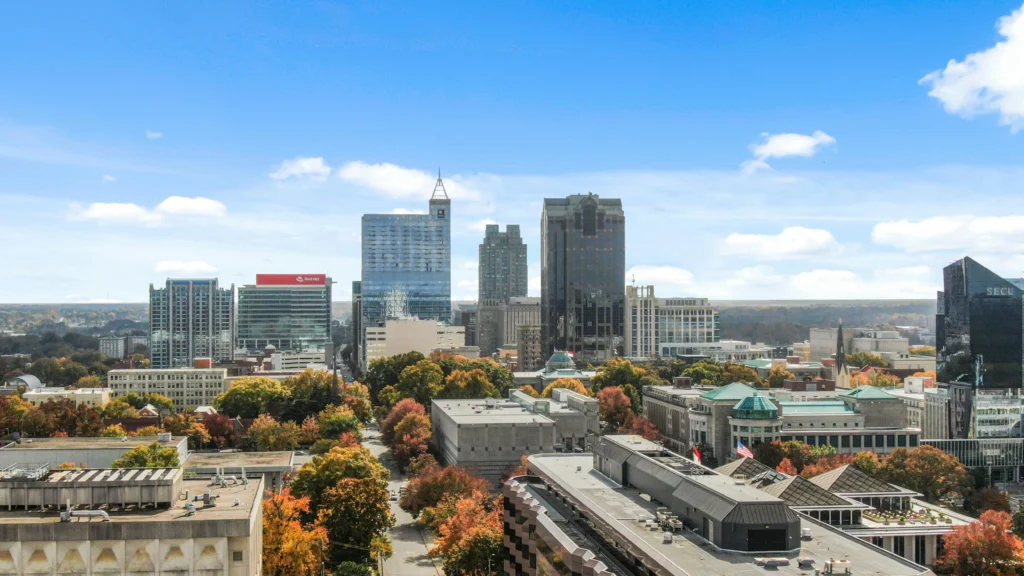
If moving to Raleigh, North Carolina, is on your radar, you’re not alone. Over the last decade, the city’s population exploded, growing by more than 25%. That growth is driven by a stable economy, high-paying jobs, outstanding education, and a quality of life that’s hard to argue with.
With tech giants and pharmaceutical companies opening campuses in and around Research Triangle Park (RTP), high-paying jobs have kept pace with rising costs. And while real estate prices have climbed in recent years, Raleigh remains genuinely affordable by the standards of the coastal metros it competes with.
In The Triangle, Raleigh, Durham, and Chapel Hill, tech, healthcare, and education are the major economic engines. Major universities like Duke, UNC-Chapel Hill, and NC State feed a diverse job market with graduates year after year, giving large corporations a near-endless talent pipeline.
Raleigh consistently ranks among the best places to live, work, and raise a family. Proximity to RTP, the Raleigh-Durham International Airport (RDU), and better-than-average commutes make it a strong choice over its Triangle neighbors. And while it’s not winning any walkability awards, Raleigh brings big-city amenities like a James Beard-recognized food scene, a thriving arts community, and professional and college sports, while maintaining a character that still feels approachable.
We’ve been moving families and businesses in The Triangle since 2013. Our crews know every neighborhood from Cary to Apex, and we love it here.
Why People Are Moving to Raleigh
Research Triangle Park anchors the region’s economy more than any single employer could. Over 300 companies operate there, employing more than 65,000 people, and sustained investment in cybersecurity, cloud computing, and AI continues to drive expansion. Beyond the park, the region’s healthcare system is among the strongest in the Southeast, the climate is mild year-round, and outdoor access is abundant. Umstead State Park, Falls Lake, and the American Tobacco Trail hold up against cities twice the size.
Beyond the job market, quality of life is a major draw. Easy access to world-class healthcare, outdoor recreation, and a more temperate climate make Raleigh an appealing destination for people relocating from colder, more expensive cities in the Northeast and Midwest.
What’s Driving Growth
For the better part of a decade, Raleigh has been in a sustained period of corporate investment. Apple, Google, Red Hat (IBM), Epic Games, and Bandwidth all have significant Triangle presences.
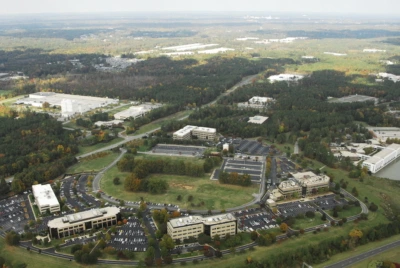
The biotech and pharmaceutical sectors, anchored by companies like Biogen, Syneos Health, and IQVIA, have turned the region into a genuine life sciences hub.
That corporate momentum is supported by a remarkable concentration of higher education. NC State University enrolls around 37,000 students in Raleigh itself, with UNC-Chapel Hill and Duke University both within 30 miles. More than 50,000 students are cycling through the Triangle’s major universities at any given time, creating a talent pipeline that companies can’t find anywhere else in the Southeast.
North Carolina has also been steadily reducing its individual income tax rate, and its business-friendly regulatory environment has attracted a wave of headquarters relocations. Combine that with a cost of living that’s still well below that of New York, Washington, D.C., and Chicago, and it’s easy to understand why those metros are among the top sources of inbound migrants.
Quality of Life Factors
Raleigh’s job market is among the tightest in the Southeast. Demand is especially strong in:
- Software engineering and IT
- Biotech and pharmaceutical research
- Healthcare (physicians, nurses, and allied health)
- Data science and cybersecurity
- Skilled trades
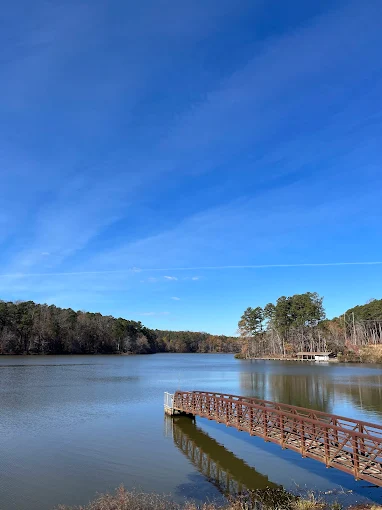
Outdoor recreation in the Raleigh area is genuinely excellent for a city of its size. William B. Umstead State Park sits entirely within the city limits with 5,500 acres of trails, lakes, and forest. Falls Lake offers boating, fishing, and hiking to the north. The American Tobacco Trail connects Durham and Chatham County via a 22-mile multi-use path. And the mild, four-season climate means you can be outside most of the year.
The cost of living has risen meaningfully over the past five years. Median home prices sit in the $420K–$460K range; up significantly from pre-pandemic levels, but still well below comparable metros on the coasts. If you’re relocating for a job in tech or life sciences, the math still works comfortably in your favor.
Food and culture round out the picture. Raleigh’s food scene has earned national recognition, and downtown’s Glenwood South and Warehouse District neighborhoods have anchored a genuine nightlife and restaurant culture. Lenovo Center hosts the Carolina Hurricanes, major concerts, and events year-round, and the city’s convention center draws a steady stream of conferences and shows.
Ready to Move? We've Got You Covered.
Whether you're ready to book or just have questions, we're here to help.
Best Neighborhoods in Raleigh for Families & Professionals
In a metro this size, where you live shapes how you live. Here’s what we’ve seen after more than a decade of moves across the Triangle.
North Hills / Midtown: Raleigh’s Urban-Suburban Sweet Spot
Character: Upscale suburban-urban mix built around the North Hills corridor, with newer condos and townhomes alongside established single-family neighborhoods. Dense enough to walk to things, spread out enough to feel residential.
Median home price: $550K–$800K
Who lives here: Professionals and families who want walkability and amenities without downtown density. Strong school access makes this a popular landing spot for relocating families who want to skip the starter-neighborhood phase.
What makes it special:
- North Hills mixed-use: Dining, fitness studios, boutique retail, and office space all within walking distance; a rare combination in a city that’s otherwise car-dependent
- Commute access: Short drive to RTP via I-440 and equally convenient to downtown Raleigh
- Schools: Served by some of Wake County’s top-rated public schools
- Parks and greenways: Connected to the Raleigh greenway system and close to Shelley Lake Park
Worth knowing: North Hills is one of Raleigh’s fastest-appreciating corridors. Condos and townhomes are the more accessible entry point if the single-family price tags are out of reach, and the rental market here is strong if you want to try before you buy.
Five Points / Historic Belmont: Character and Walkability Near Downtown
Character: Historic early-20th century residential neighborhood defined by craftsman bungalows, colonial revivals, and tree-lined streets that feel a world away from new construction. The kind of neighborhood where neighbors actually know each other.
Median home price: $550K–$750K
Who lives here: Young professionals, couples, and families who prioritize walkability and neighborhood identity over square footage. This is the neighborhood for people who’ve done their research and know what they want.
What makes it special:
- The Village District (formerly Cameron Village): One of Raleigh’s most established walkable shopping and dining destinations, right on the neighborhood’s edge
- WRAL Azalea Garden: Free, stunning, and worth seeing in bloom every spring
- Downtown proximity: Short bike ride or drive to Glenwood South and the Warehouse District
- Community identity: Five Points has one of the strongest neighborhood association cultures in Raleigh; events, advocacy, and a strong sense of place
Worth knowing: Inventory in Five Points and Belmont is consistently tight. Homes move fast, often over asking, and many need renovation. Budget accordingly if you’re eyeing the older stock.
Cary: Raleigh’s Most Polished Suburb
Character: A master-planned suburb with a level of amenity, safety, and school quality that draws relocating families from across the country. Consistently one of the safest cities in the United States, full stop.
Median home price: $480K–$600K
Who lives here: Families with school-age children, tech professionals taking advantage of RTP proximity, and one of the largest and most established Indian-American communities in the Southeast; Cary’s diversity is a real strength.
What makes it special:
- Wake County Schools: Cary’s public schools are among the best in the state, with multiple magnet and STEM options
- Hemlock Bluffs Nature Preserve: 150+ acres of old-growth forest with rare Carolina hemlock trees; a surprise to most newcomers
- SAS Institute: One of the world’s largest private software companies is headquartered in Cary, creating a stable anchor employer and a professional population to match
- Koka Booth Amphitheater: Outdoor concert venue on the lake; the kind of local amenity that ends up on your “why I love living here” list
- Food scene: Cary’s restaurant landscape reflects its diversity; excellent Indian, Korean, and Southeast Asian food that rivals what you’d find in much larger cities
Worth knowing: Locals joke that Cary stands for “Containment Area for Relocated Yankees.” It’s affectionate. Cary has fully embraced its reputation as a planned, polished, well-run community, and the people who choose it tend to love it.
Downtown Raleigh / Glenwood South: Urban Living in the Capital City
Character: Raleigh’s urban core has come into its own over the last decade. Historic warehouse conversions, high-rise apartments, boutique hotels, and a dense concentration of restaurants and bars make this the city’s most dynamic area, especially after dark.
Median home price/rent: $1,600–$2,400/month for apartments; condos from $400K–$700K
Who lives here: Young professionals, empty nesters downsizing from the suburbs, and remote workers who want urban energy and easy access to everything. This is also where you’ll find most of Raleigh’s transplants from New York and D.C. in their first year.
What makes it special:
- Restaurant row: Bida Manda, Death & Taxes, Brewery Bhavana, and dozens of others have made downtown Raleigh a genuine food destination
- Glenwood South: The city’s premier bar and nightlife district — compact, walkable, and busy on weekends
- Lenovo Center access: A short drive or rideshare to Hurricanes games and major concerts
- Warehouse District: Emerging arts and creative district with galleries, breweries, and live music venues
Worth knowing: Downtown moves have specific logistics. Most high-rise and condo buildings require a Certificate of Insurance (COI) from your mover before they’ll allow a move, typically $1–2M in liability coverage. Service elevator reservations are standard, and loading zones on Glenwood South and West Street are limited. Plan this well in advance (more on that in the logistics section below).
Wake Forest / North Raleigh: Room to Breathe
Character: A fast-growing suburban corridor of newer construction, larger lots, and strong school options; the choice for families who want more space per dollar and don’t mind a commute.
Median home price: $380K–$520K
Who lives here: Growing families, commuters to RTP or downtown, and buyers who’ve been priced out of closer-in neighborhoods but don’t want to leave the Raleigh area.
What makes it special:
- Heritage High School and a strong network of newer elementary and middle schools
- Falls Lake State Recreation Area: Boating, swimming, fishing, and hiking, minutes from residential neighborhoods
- Value: More square footage per dollar than anything closer to downtown
- Infrastructure: Newer roads, utilities, and retail corridors that haven’t had time to age
Worth knowing: The trade-off is commute time. I-401 and US-1 north of Wake Forest can back up badly during rush hour. If you’re RTP-bound, add 20–30 minutes to your mental model during peak times.
Other Neighborhoods of Note
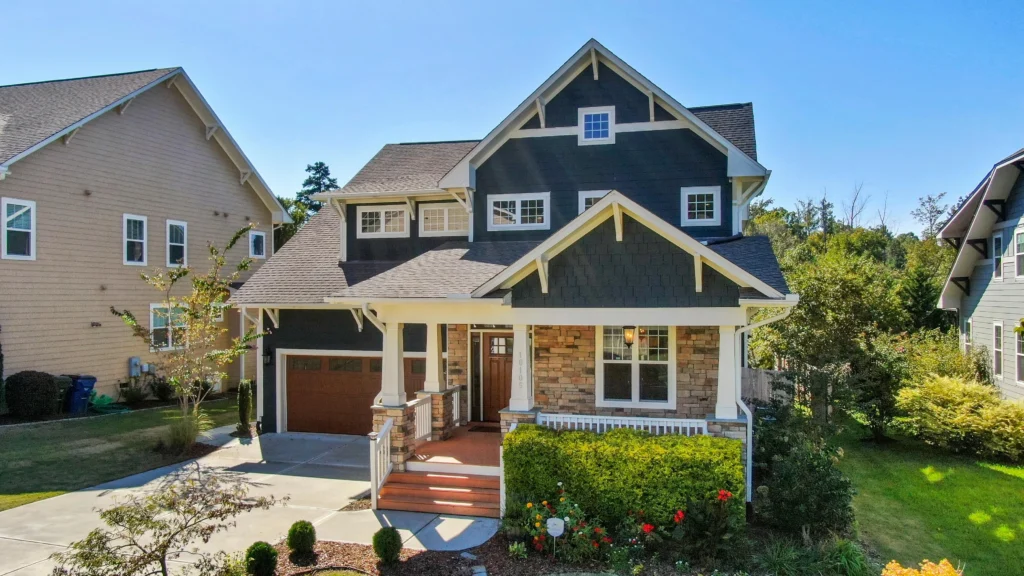
Oakwood Historic District: Raleigh’s oldest residential neighborhood, with Victorian and Queen Anne homes immediately adjacent to downtown. Heavily protected historic district where renovations are regulated, but values are strong.
Holly Springs / Fuquay-Varina: Southern Wake County’s fastest-growing communities. More affordable entry points, newer schools, and a suburban character that’s drawing young families out of closer-in, pricier neighborhoods.
What Is the Cost of Living in Raleigh, NC?
Raleigh has become more expensive over the past five years, but it remains meaningfully below the coastal metros it competes with for talent.
<tdstyle=”border: 1px solid #ccc; padding: 8px;”>~$440K
| Category | Raleigh | Washington D.C. | New York City | National Avg |
|---|---|---|---|---|
| Median home price | ~$435K-$460K | ~$600K-$700K | ~$750K+ | |
| State income tax | 3.99% flat rate | ~8.5% | ~6.85% | Varies |
| Average rent (2BR) | ~$1,579/mo | ~$2,800-$3,200/mo | ~$3,800+/mo | ~$1,965/mo |
| Property tax rate | ~0.80% effective | ~0.85% | ~0.90% | ~1.0% |
| Overall cost of living | ~6% below national avg | Well above avg | Among highest in US | Baseline |
North Carolina’s flat income tax rate dropped to 3.99% for the 2026 tax year, down from 4.25% in 2025, and is on a legislative path toward further reductions. Property taxes in Wake County run approximately 0.80% of assessed value, well below the national average. On a $450,000 home, expect roughly $3,600 annually in property taxes. For high earners relocating from New York, California, or D.C., the combined tax advantage is substantial.
What Makes Moving to Raleigh Unique
Raleigh has its own logistics that can catch first-time movers off guard, especially if you’re coming from a smaller market or a city with fewer high-rise buildings.
High-Rise and Condo Considerations (Downtown)
If you’re moving into a downtown apartment, condo, or high-rise building, expect the following:
- Certificate of Insurance (COI): Most downtown buildings require your moving company to provide a COI showing $1–2M in liability coverage before they’ll approve a move. This typically takes 2–5 business days to coordinate, so don’t wait until the week of.
- Service elevator reservation: Buildings with dedicated service elevators require advance scheduling—plan 2–4 weeks in advance. Most buildings restrict moves to business hours, Monday through Friday.
- Loading zone access: Glenwood South and the West Street corridor have limited on-street loading zones. Coordinate with your building management early to identify the correct loading dock and any time restrictions.
- Warehouse District specifics: Some older converted warehouse buildings have freight-elevator weight limits and door-clearance restrictions. Always ask about maximum load weight and door dimensions before your crew shows up.
Suburban HOA Activity
Wake County and Cary have some of the most active HOA communities in North Carolina. Before your move:
- Check your covenants for moving truck parking time limits (many restrict trucks overnight)
- Confirm whether your HOA requires proof of insurance or pre-approved vendors
- Note that new construction neighborhoods in North Raleigh and Wake Forest often have temporary access restrictions during active build-out phases
Traffic Patterns
Raleigh’s growth has consistently outpaced its road infrastructure. The Beltline (I-440), I-40 toward RTP, and US-1 are the corridors most likely to affect your move:
- I-440 (The Beltline): Gets congested in all directions during morning and evening rush. Start your move before 7 am if possible.
- I-40 westbound toward RTP: Heavy with commuter traffic 7–9 am and 4:30–6:30 pm
- US-1 north: The Wake Forest commuter route — plan around peak hours if you’re moving in that direction
Moving Calendar: When to Move (and When to Avoid)
Best Times
- October–November: Raleigh’s fall is genuinely beautiful — temperatures settle into the 60s–70s°F, humidity drops sharply after Labor Day, and the fall foliage along the greenways is a bonus. Moving companies have better availability as the summer rush ends.
- March–April: Pre-summer and pre-graduation. The weather is pleasant, and moving company schedules aren’t yet maxed out. Aim for early April before the end-of-semester scramble starts.
- January–February: Raleigh’s slowest-moving season. Pricing is typically better, availability is easy to come by, and NC winters are mild enough that most moves go off without weather complications. The occasional ice storm is the one caveat — keep an eye on the forecast.
- Weekdays vs. weekends: Monday–Thursday move-in times typically come with better pricing and easier elevator building reservations. If you’re moving into downtown, weekdays are far easier to coordinate loading zone access.
Times to Avoid
- Mid-August (university move-ins): NC State’s move-in creates gridlock along Hillsborough Street and Western Boulevard. Duke and UNC move-ins in the same window compound the problem across the whole Triangle. Avoid the third and fourth weeks of August entirely if you can.
- Dreamville Festival (April, Dorothea Dix Park): One of the Southeast’s premier music festivals draws large crowds to south Raleigh, affecting downtown and I-440 south access.
- ACC Tournament and NCAA events: The Triangle is a frequent host for both — check the calendar when you’re scheduling, as downtown hotels fill and event traffic affects key corridors.
- July–August peak heat: Temperatures push into the 90s°F with full Southeast humidity. It’s physically demanding on crews and slows everything down. This is also peak moving season, so pricing and availability are at their worst.
Things to Do in Raleigh — But Maybe Not on Moving Day
- Dreamville Festival (April, Dorothea Dix Park)
- Wide Open Bluegrass (September, downtown Raleigh)
- Hopscotch Music Festival (September, downtown venues)
- NC State Fair (October, State Fairgrounds) — I-40 west is a parking lot for two weeks
- Carolina Hurricanes home games (October–April, Lenovo Center)
Let Little Guys Movers Make Your Raleigh Move a Cinch
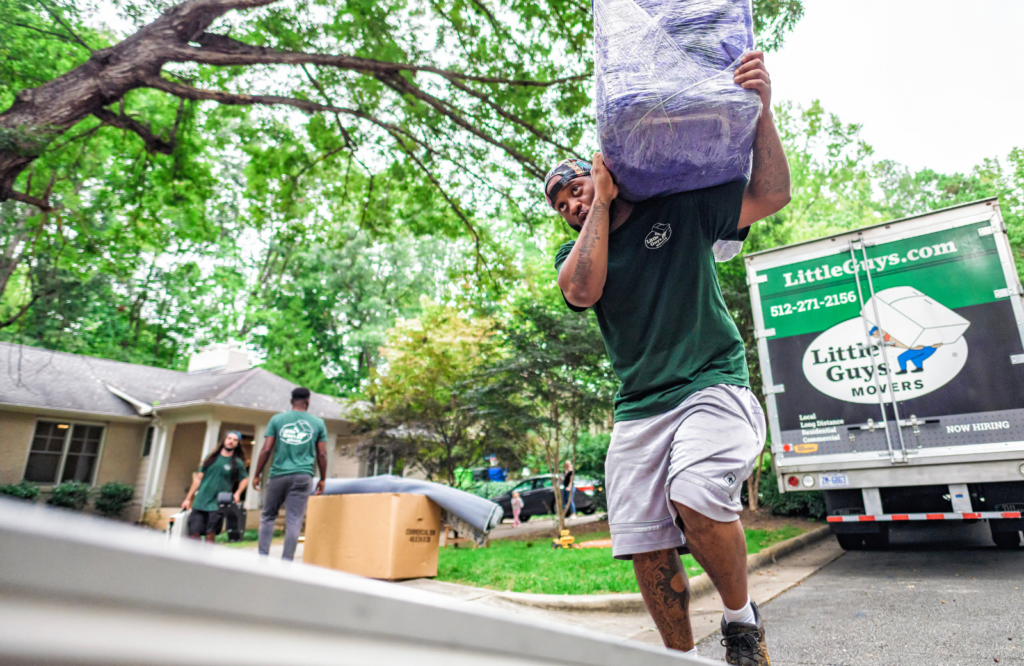
We’re biased. We think Little Guys is the best choice when moving to Raleigh.
Whether you’re heading to the Triangle for a new role at RTP, starting at NC State, or just ready for a change of scenery, we’re committed to making your move as smooth as humanly possible.
Our Raleigh crew knows this city. From navigating the Beltline before rush hour to coordinating COIs with downtown building management, we’ve done it all, and we’re happy to walk you through the process before moving day.
From the team at Little Guys Movers…Welcome to Raleigh!
Ready to Move? We've Got You Covered.
Whether you're ready to book or just have questions, we're here to help.