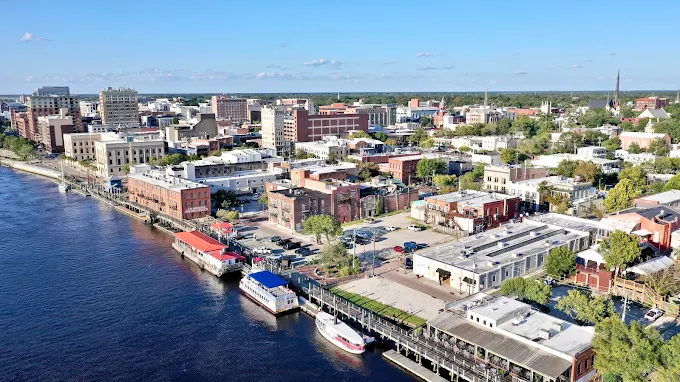
Moving to Wilmington, North Carolina, feels less like a journey and more like a homecoming. You see, some cities grow on you. Wilmington, North Carolina, tends to grab people right away and hold on for dear life.
Maybe it’s the Cape Fear River glittering beside a historic downtown that looks as if it were lifted from another century. Maybe it’s the beach, a real, honest-to-god Atlantic beach, that’s 15 minutes away.
Or maybe it’s that after years of watching Raleigh and Charlotte become unrecognizable, homogenized versions of themselves, Wilmington still feels like a place with identity. Rooted in 285 years of history, the city knows who it is, and it isn’t going anywhere.
The Port City is one of the fastest-growing metros in North Carolina and has consistently been ranked among the best places to live on the East Coast. Remote workers, retirees, and young professionals relocating from the Northeast and the Triangle have been discovering what locals already know: this is a city that rewards the people who choose it.
We’ve been moving families up and down the coast for years. We know Wilmington’s neighborhoods, its bridges, its hurricane rhythms, and why people who move here rarely leave.
Let us show you around.
Why People Are Moving to Wilmington
Wilmington draws people for different reasons: the beach, the history, the healthcare, the university, and the cost of living. And that diversity of appeal is part of what makes the city’s growth so durable.
A City With Deep Roots
Wilmington was founded in 1739 and, by 1850, was the largest city in North Carolina. Port City, as it’s also known, was shaped by the Cape Fear River and played an integral role in the Civil War. While the scars of conflict are gone, what’s left behind is a downtown that’s been on the National Register of Historic Places since 1974.
In 2020, it became the first city in the country designated an “American World War II Heritage City.” That history isn’t preserved behind velvet ropes; it’s in the architecture you walk past every day. The Battleship North Carolina is moored across the river, and the Bellamy Mansion and Fort Fisher sit right in the heart of downtown Wilmington.
For people coming from younger cities, there’s a significantly different experience living somewhere with this much accumulated character.
What’s Driving Growth
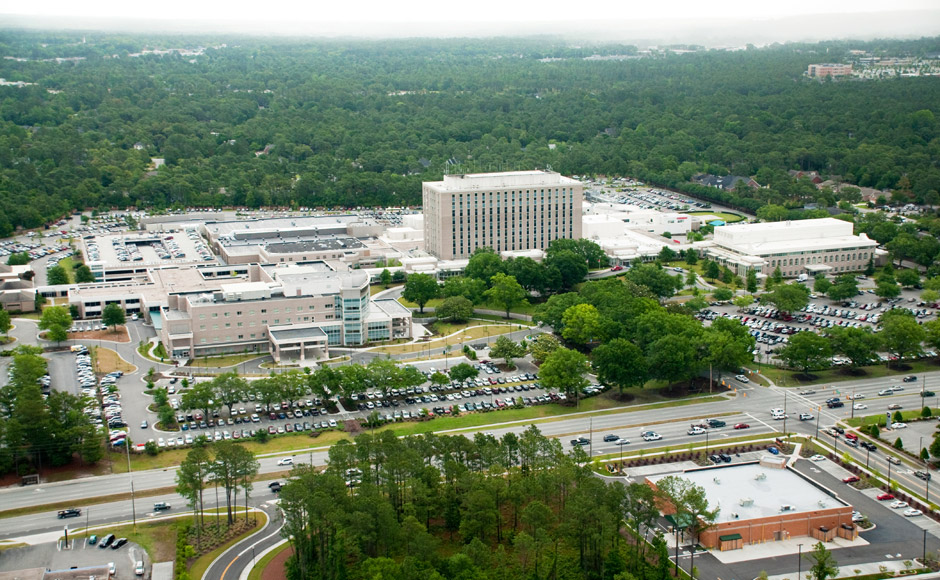
Wilmington is projected to add more than 13,800 jobs between 2024 and 2034, a 6.9% increase.
The economic base is more diversified than most people expect:
Healthcare: Novant Health and Atrium Health have both expanded significantly in the Wilmington region, making healthcare one of the city’s largest and most stable employment sectors. New Hanover Regional Medical Center, now a Novant facility, is one of the area’s largest employers.
Life sciences and technology: PPD (now part of Thermo Fisher Scientific) has maintained a major presence in Wilmington for decades. The city has also emerged as a rising tech hub, landing at No. 13 on the South’s Best Metros for Tech in 2024, drawing attention for its affordability and talent.
Clean energy: GE Hitachi Nuclear Energy is headquartered in Wilmington, giving the city a significant stake in the growing nuclear energy sector.
Education: UNC Wilmington (~18,000 students) anchors the city’s academic and research identity, and is one of the region’s top employers.
Construction and logistics: Construction was the fastest-growing sector in the Wilmington labor market between 2024 and 2025, reflecting the region’s ongoing residential and commercial development boom.
Film production: Wilmington has a 40-year history as a film and television production hub, a legacy that includes productions like Iron Man 3, Dawson’s Creek, One Tree Hill, and dozens of others.
Shifting market headwinds have put pressure on the industry in recent years, driven by evolving streaming economics and competition from international incentive programs. But it remains part of the city’s creative DNA and continues to bring periodic production activity through studios, including Cinespace and Dark Horse Stages.
Quality of Life Factors

The job market in Wilmington skews toward healthcare, education, technology, and professional services, with an emerging tech sector that’s growing faster than most people realize.
Outdoor recreation here is the kind that people in landlocked cities daydream about. Wrightsville Beach, consistently ranked among the best beaches on the East Coast, is 15 minutes from downtown. Carolina Beach State Park offers camping, hiking, and freshwater fishing.
Masonboro Island Reserve is an undeveloped barrier island accessible only by boat and is one of the largest undisturbed coastal habitats on the East Coast.
The cost of living has risen in recent years as demand has outpaced supply, but Wilmington remains well below coastal peers. Median home prices in the $360K–$420K range look very different when set against a waterfront lifestyle that would cost two or three times as much in Virginia Beach, Charleston, or anywhere along the Florida coast. Rents are similarly competitive for a coastal city.
Food and culture in Wilmington have benefited from a decade of sustained investment. The downtown riverfront along Water Street and Castle Street has a genuine, walkable restaurant and bar scene, not a manufactured tourist district, but something that evolved organically from a city that takes its food seriously.
The Cameron Art Museum is the cultural anchor, with a permanent collection and a site that also includes a walkable Civil War battlefield. The Thalian Hall Center for the Performing Arts, built in 1858 and one of the oldest continuously operating theaters in the country, brings live performance to a building that has hosted audiences for more than 160 years.
Best Neighborhoods in Wilmington for Families & Professionals
Like a thing of beauty, the best neighborhood is always in the eye of the beholder. People at different life stages have different needs, and the perfect house on the perfect street is 100% subjective and may not exist.
That said, these are the neighborhoods we know best after years of moving people into them.
Historic Downtown / Wilmington Historic District: The Port City at Its Best
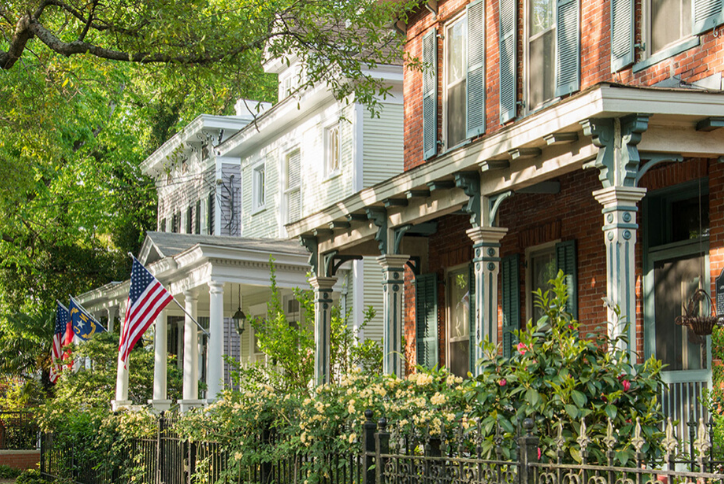
Character: The heart of Wilmington is unlike anything else in North Carolina, a walkable grid of antebellum and Victorian architecture along the Cape Fear River. Packed with restaurants, galleries, and independent businesses woven into buildings that predate the Civil War. The Riverwalk stretches for nearly a mile along the water, connecting it all.
Median home price: $450K–$700K
Who lives here: Young professionals, empty nesters downsizing from the suburbs, remote workers drawn by the lifestyle, and long-time Wilmington families who never considered leaving. Downtown Wilmington has the rare quality of attracting people at both ends of the age spectrum and making it work.
What makes it special:
- The Riverwalk: One of the finest urban waterfronts in the South — restaurants, events, sunset views, and the USS North Carolina visible across the river
- Architecture: The Wilmington Historic District contains some of the finest examples of antebellum and Victorian residential architecture in the Southeast; walking the streets here is genuinely remarkable
- Walkability: Rare for a North Carolina city of this size, groceries, dining, coffee, and entertainment are all accessible on foot
- Culture: Thalian Hall, the Cameron Art Museum, the Cape Fear Museum, and a rotating calendar of waterfront events within easy reach
Worth knowing: Downtown is a popular event destination, which means parking can be a genuine challenge on weekends and during festivals. Some historic homes have the quirks that come with age — older systems, narrow lots, limited off-street parking. And like any urban neighborhood, some blocks are more polished than others.
Landfall: Wilmington’s Premier Gated Community

Character: A private, gated master-planned community on the northern edge of Wilmington, built around two golf courses and bordered by the Intracoastal Waterway. Landfall is the most expensive zip code in Wilmington and has been for decades. It’s the city’s address of choice for executives, physicians, and retirees who want security, amenities, and a short drive to Wrightsville Beach.
Median home price: $800K–$2M+
Who lives here: Corporate executives, physicians, retirees from larger metros, and professionals who want a high-end lifestyle with a community infrastructure to match.
What makes it special:
- Golf: Two championship courses — the Dye Course and the Nicklaus Course — designed by Pete Dye and Jack Nicklaus, respectively
- Security and privacy: 24-hour gated access and a security staff that’s among the most professional in the region
- Intracoastal Waterway access: Some properties have direct waterway access and private docking
- Proximity to Wrightsville Beach: Less than 10 minutes to one of the best beaches on the East Coast
- Landfall Club amenities: Tennis, fitness, aquatics, and dining for members
Worth knowing: Landfall’s HOA structure is comprehensive and comes with significant dues. The community has specific rules around everything from landscaping to parking. Prospective homeowners should review the covenants carefully before committing.
Moves into Landfall require coordination with the security gate; provide your mover’s information to community management in advance.
Mayfaire / Eastwood Corridor: Suburban Convenience Near the Beach
Character: Wilmington’s most practical suburban corridor with a mix of newer construction residential neighborhoods, a thriving mixed-use retail and dining district at Mayfaire Town Center, and proximity to both UNCW and Wrightsville Beach. If you’re relocating for a job and want to minimize friction in daily life, this is the neighborhood that delivers.
Median home price: $380K–$580K
Who lives here: Young families, UNCW faculty and staff, professionals who want beach access and suburban amenities without the price premium of Landfall, and corporate relocations into the area.
What makes it special:
- Mayfaire Town Center: An outdoor mixed-use development with retail, restaurants, a movie theater, and fitness — the walkable suburban commercial center that the rest of Wilmington points to
- UNCW proximity: A short drive or easy commute to campus, making this the de facto landing spot for university hires
- Beach access: Wrightsville Beach is 10–15 minutes, depending on traffic, close enough to be a genuine daily or weekend amenity
- Schools: Served by New Hanover County Schools with access to some of the district’s better-regarded elementary programs
Worth knowing: The Eastwood Road corridor can back up badly during beach season (May–September). The stretch between Military Cutoff and Wrightsville Beach especially gets congested on weekend mornings. It’s a minor trade-off for the lifestyle, but it’s worth knowing before moving day.
Ogden / Porters Neck: Room to Breathe on the North Side
Character: Wilmington’s fastest-growing northern corridor with newer residential developments, larger lots, and a quieter pace that appeals to families who want proximity to the city without density. Porters Neck, in particular, has developed into a self-contained community with its own retail and dining.
Median home price: $380K–$600K
Who lives here: Growing families, buyers priced out of closer-in neighborhoods, retirees who want a quieter setting with easy access to the rest of the city, and professionals with flexible schedules who can avoid peak-hour traffic.
What makes it special:
- Lot sizes: Noticeably more space per dollar than comparable neighborhoods to the south
- Porters Neck Country Club: Golf, fitness, and tennis in a neighborhood setting
- New Hanover County Schools: The northern corridor feeds into well-regarded schools, including Laney High School
- Topsail Island access: A short drive to Topsail Beach, a quieter alternative to the more crowded Wrightsville
Worth knowing: Ogden and Porters Neck are north of the city on US-17, the primary artery, which can experience significant congestion during the morning rush. The Market Street bridge area is a known chokepoint, so plan accordingly.
Nearby: Wrightsville Beach and Carolina Beach

Both are technically separate municipalities from Wilmington, but they’re worth including for anyone considering coastal living in its purest form.
Wrightsville Beach is a small island community incorporated in 1899, with restaurants, shops, marinas, and some of the best surf and swim conditions on the North Carolina coast. It was once a summer retreat accessible only by boat and steam train before WWI. Today, it’s one of the most sought-after zip codes on the East Coast. Median home prices run $800K–$1.5M+, and the rental market is extremely active during beach season.
Carolina Beach and neighboring Kure Beach offer a more affordable coastal entry point. Smaller homes, a classic boardwalk character, and a pace that’s distinctly more relaxed than Wrightsville. Median prices in the $400K–$600K range. Carolina Beach State Park and Fort Fisher State Historic Site are both within a short drive.
Other Neighborhoods of Note
Castle Hayne: A rural community northwest of the city with larger parcels and significantly lower price points — popular with buyers who want land and a country feel within 20 minutes of downtown.
Leland: A fast-growing suburb across the Cape Fear River in Brunswick County with newer construction, lower property taxes, and strong school options — one of the fastest-growing communities in the state. Accessible via the Cape Fear Memorial Bridge, it functions as a practical alternative for buyers priced out of New Hanover County.
Ready to Move? We've Got You Covered.
Whether you're ready to book or just have questions, we're here to help.
What Makes Moving to Wilmington Unique
Wilmington has a specific set of logistics that most moving guides don’t cover. After years of moves in the area, here’s what actually matters.
Hurricane Season Planning
Wilmington sits on the Atlantic coast, and hurricane season (June–November, with peak risk in August–October) is a real consideration for any move. This doesn’t mean disaster is imminent. The City of Wilmington is well-prepared, well-practiced, and most seasons pass without major impact.
But it does mean:
- Avoid scheduling moves during active storm watches or warnings — this sounds obvious, but it’s worth building flexibility into your timeline.
- Late October through November and February through April are the safest windows for coastal moves from a weather standpoint.
- New residents should familiarize themselves with evacuation routes (primarily US-74/76 westbound and I-40 westbound) before they need them.
- Flood zone designation matters when choosing a home. Ask your realtor and review FEMA flood maps for any property you’re seriously considering.
Bridge and Drawbridge Routing
Wilmington is a river city, which means bridges are part of daily life, and a significant consideration for large moving trucks.
- The Cape Fear Memorial Bridge (US-17 business route into downtown) has weight and height restrictions that affect some truck configurations; verify with your mover in advance.
- The Isabel Holmes Bridge (MLK Parkway) and the Wilmington Railroad Bridge (drawbridge, primarily freight) are key corridors to understand
- Drawbridge openings on the waterway can cause brief but unexpected delays. Factor this in when planning timing for beach community moves.
- Leland moves via the Brunswick Town connector are generally easier for large trucks than routing through downtown.
Market Street and Seasonal Traffic
The Market Street corridor and College Road are Wilmington’s primary east-west arteries, and both experience meaningful congestion during beach season.
- College Road heading toward Wrightsville Beach backs up significantly on Friday afternoons and Saturday mornings from May through September.
- Market Street near Independence Mall is a year-round congestion point during the morning and afternoon rush hours.
- Early morning starts (before 8 am) on weekdays are the best way to avoid both patterns.
Beach Town Move Considerations
Wrightsville Beach and Carolina Beach have seasonal parking restrictions and narrow streets that require advance coordination:
- Wrightsville Beach parking permits are strictly enforced from April through October, and you should confirm where your truck can legally be staged before arrival.
- Narrow beach-town streets limit the turning radius for large trucks; 26-foot trucks are typically the largest that can navigate beach communities effectively.
- Off-season moves (November through March) are significantly easier logistically and almost always available at better pricing.
Moving Calendar: When to Move (and When to Avoid)
Best Times
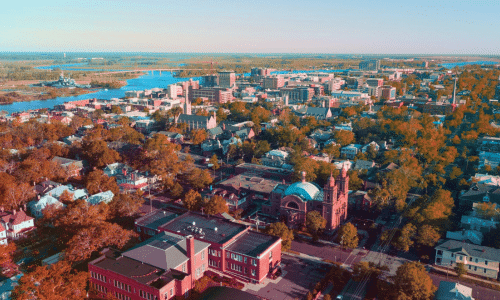
- October–November: The sweet spot. Hurricane season has typically wound down, beach-season congestion is gone, and Wilmington’s fall is genuinely beautiful. Mild temperatures, lower humidity, and the kind of light that makes the river and historic district look their best. Moving company availability opens up significantly after Labor Day, and pricing reflects it.
- February–March: The other strong window. Pre-beach season, mild winter temperatures (Wilmington rarely sees hard freezes), and the azaleas begin blooming in late March. UNCW’s semester timing means some surge in late January, but February is typically clean.
- Weekdays: Always preferable to weekends in Wilmington, especially for beach community moves where parking restrictions are tighter on weekends.
Times to Avoid
- August–October (peak hurricane season): If a hurricane watch or evacuation order is issued, your move will be canceled regardless of any deposits. The risk is real enough that we recommend avoiding it if your timeline allows.
- Late August (UNCW move-in): The campus corridors around College Road, Racine Drive, and Chancellor Drive become congested during the third and fourth weeks of August. If you’re moving anywhere near UNCW, this window compounds an already complicated situation.
- Azalea Festival (April, downtown): One of Wilmington’s most beloved annual events draws large crowds downtown, and the Water Street, Market Street, and the Riverwalk corridors are affected. A beautiful time to be in Wilmington; a difficult time to move a truck through it.
- Memorial Day through Labor Day (beach communities): Summer is the worst possible time for moves to Wrightsville Beach or Carolina Beach. Tourist parking, congested beach roads, and permit restrictions make it significantly harder and slower. If you’re moving to either beach town, plan for fall or late winter.
Things to Do in Wilmington — But Maybe Not on Moving Day
- North Carolina Azalea Festival (April, downtown) — one of the Southeast’s longest-running festivals; downtown is beautifully chaotic
- Riverfest (October, downtown waterfront)
- Cucalorus Film Festival (November, downtown) — one of the best independent film festivals in the South
- Cameron Art Museum events and outdoor concerts (year-round)
- Battleship North Carolina public events and overnight programs
- Wrightsville Beach annual surf competitions (summer — beach road closures)
Let Little Guys Movers Make Your Wilmington Move a Cinch
We’re biased. We think Little Guys is the best choice when moving to Wilmington. Whether you’re coming for a new role in healthcare or life sciences, planting roots near the coast after years in a landlocked city, or simply ready for a place where history, water, and quality of life exist in the same zip code, we’re committed to making your move as smooth as possible.
Our crew knows this city. We know the bridge restrictions, the beach parking rules, the hurricane-season windows, and how to navigate a historic-district street with an antique doorframe and a full truck. We’re happy to walk you through any of it before moving day.
Get your Free Quote on our website. Our estimators will be in touch soon to schedule a walk-through — in person or virtually — to ensure the most accurate estimate.
From the team at Little Guys Movers — welcome to Wilmington.
Ready to Move? We’ve Got You Covered.
Whether you’re ready to book or just have questions, we’re here to help.
Ready to Move? We've Got You Covered.
Whether you're ready to book or just have questions, we're here to help.